Patients rights in Karnataka through a governmentality lens
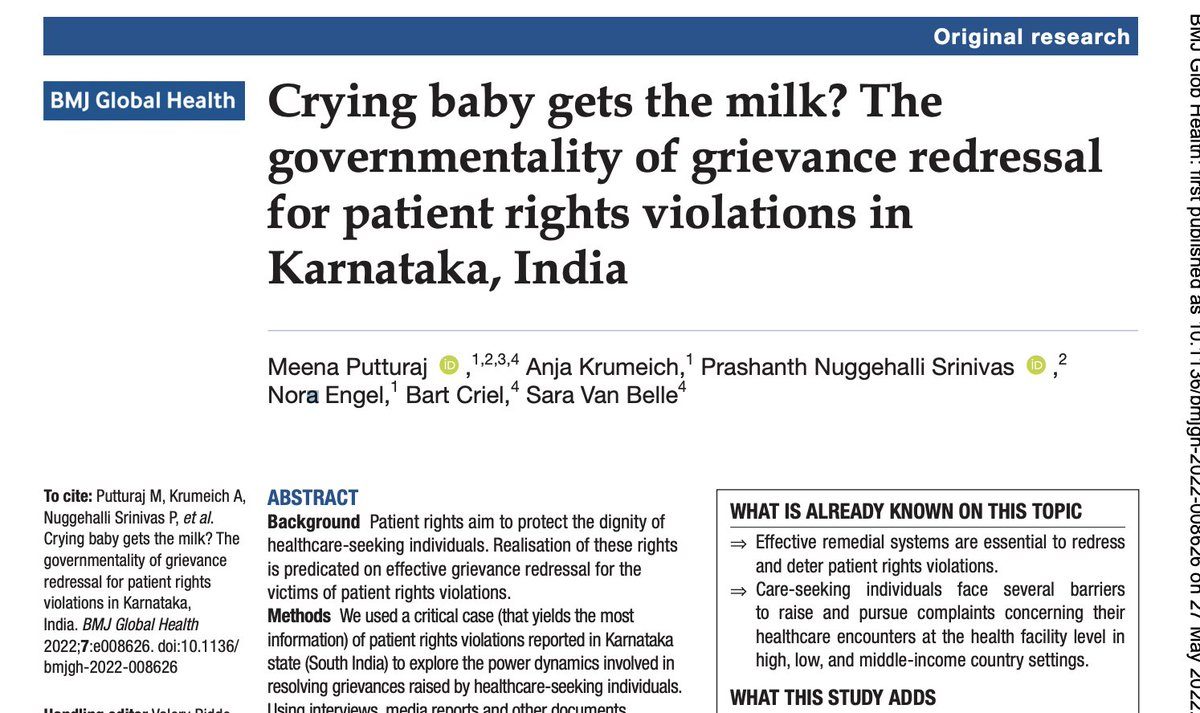
🧵 on paper by my PhD student, Meena on patients rights in Karnataka (for full thread on her PhD see here); we used Foucault’s governmentality lens to examine grievance redressal: “the interaction of micropractices & techniques of power employed by actors to govern processes & outcomes.” https://gh.bmj.com/content/7/5/e008626
At @iphindia HealthEquity cluster, we use HealthPolicy HealthSystems approaches to examine drivers of inequity; in many public & private healthcare settings, nearly absent grievance redressal for patient rights violations; this affects doctors, health workers too;
Healthcare “transactions” are not equal exchange of information and advice but need to be governed in the interest of safeguarding patient safety, but also to ensure professional legitimacy & trust (in healthare profs); patient rights facilitate both these;
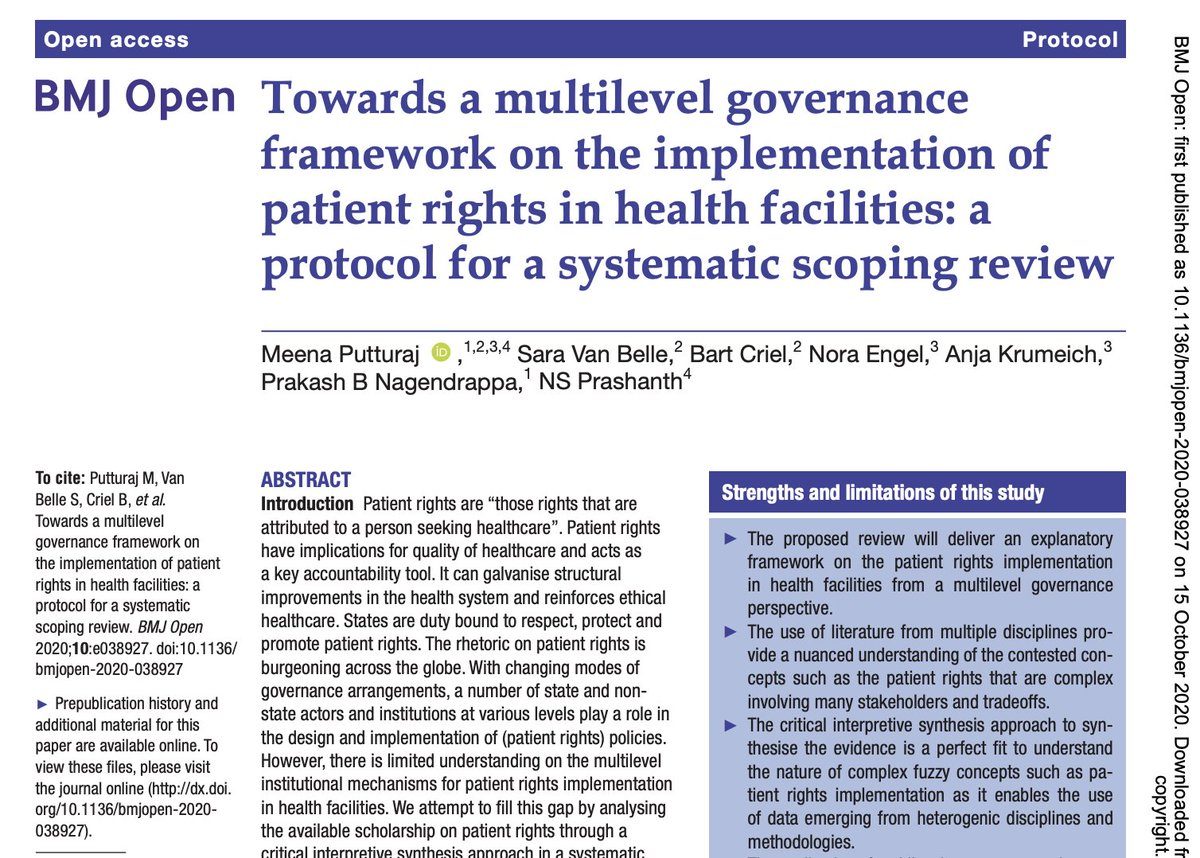
Many countries have elaborate institutional arrangements to “examine & resolve” grievances arising out of healthcare interactions; so Meena began by examining these arrangements using a scoping review in @BMJ_Open; see protocol 👇🏾https://bmjopen.bmj.com/content/10/10/e038927.long
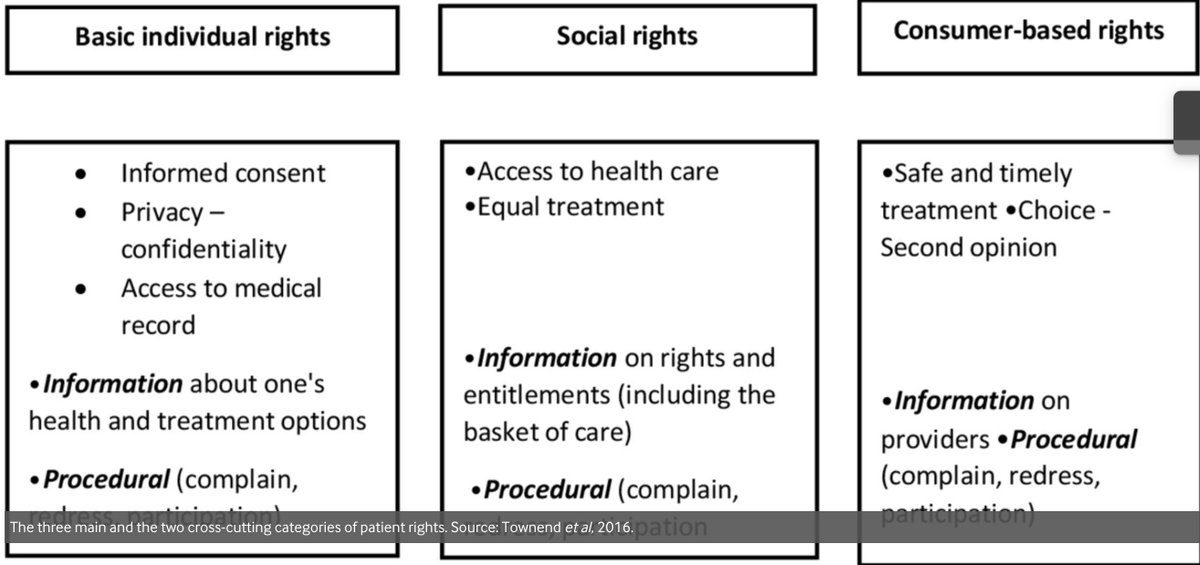
We conceptualised patient rights at multiple levels: basic rights that any individual enjoys, social rights in the context of living within a societal framework & consumer-based rights in the context of healthcare shaping a consumerist market architecture as well
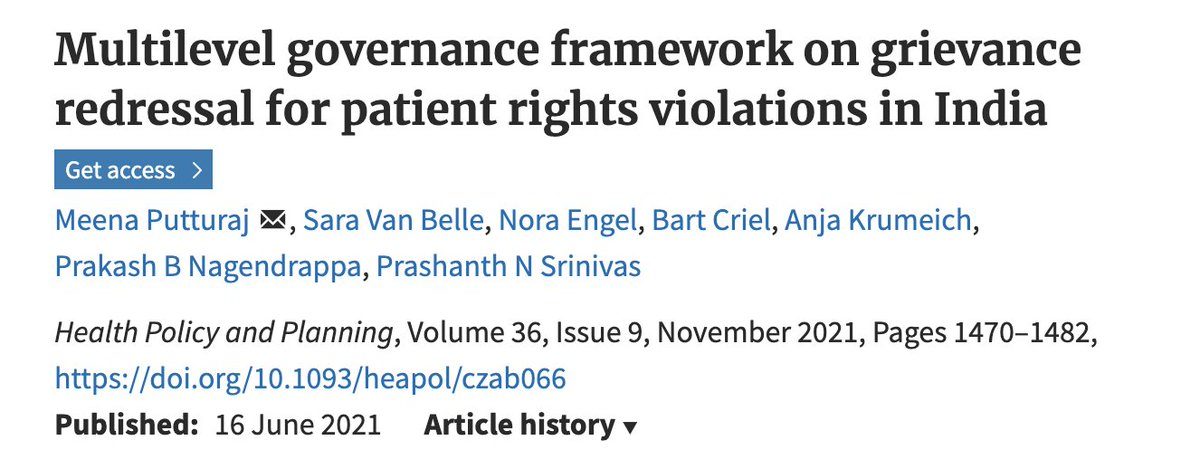
Based on above scoping review, she reported a multilevel grievance redressal framework in @HPP_LSHTM wherein institutional arrangements to safeguard patient rights are mapped; see full paper here: https://www.ncbi.nlm.nih.gov/pmc/articles/PMC7611949/
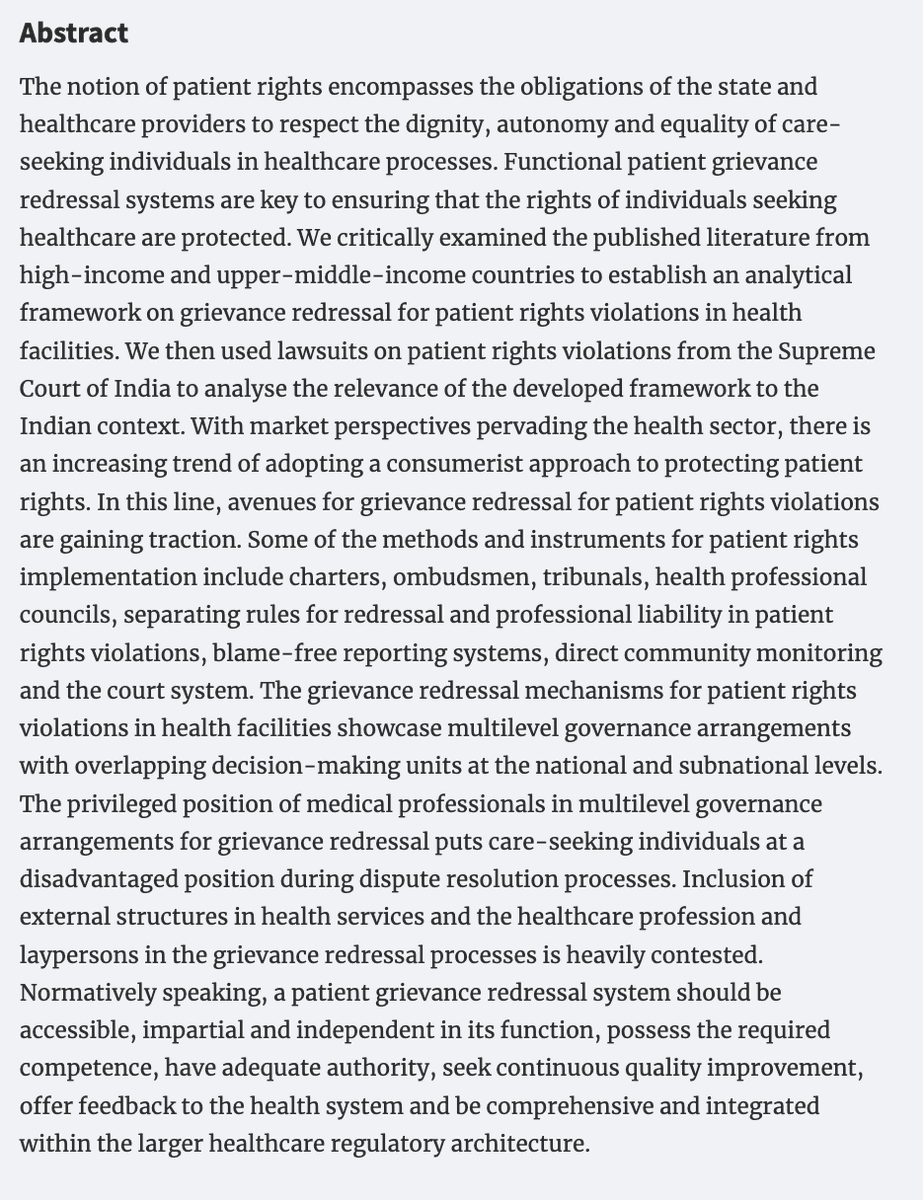
“Some of the methods & instruments for patient rights implementation include charters, ombudsmen, tribunals, health professional councils, separating rules for redressal and professional liability in patient rights violations, blame-free reporting systems, direct community…
…monitoring and the court system. The grievance redressal mechanisms for patient rights violations in health facilities showcase multilevel governance arrangements with overlapping decision-making units at the national and subnational levels.”
Many Indian states have demonstrably weak capacity to regulate/govern health systems; see for eg. this paper from Sheikh, Saligram & Hort explaining how/why this happens in the context of two states; https://academic.oup.com/heapol/article/30/1/39/563025
Southern Indian state of Karnataka has laws and a variety of bodies that are supposed to safeguard (patient) rights; so we use a specific critical case study to understand how these laws and institutional arrangements worked (or didnt!);
We were particularly intersted in examining how actors and institutions related to medical professional bodies representing their interests & State institutions played a role in a specific case of patient rights violations;
current knowledge-base largely focuses on individual awareness of patient rights; but for long individual awareness has been falsely problematised esp in health systems where equity is poorly safeguarded; also in context of power asymmetry & overly bureaucratised procedures
In the article, we use the case to also examine if the case helps us in understanding if the grievance redressal system ensures both “procedural & substantive justice”; after all, remedies to rights violations can only work if they are both procedurally & substantively fair
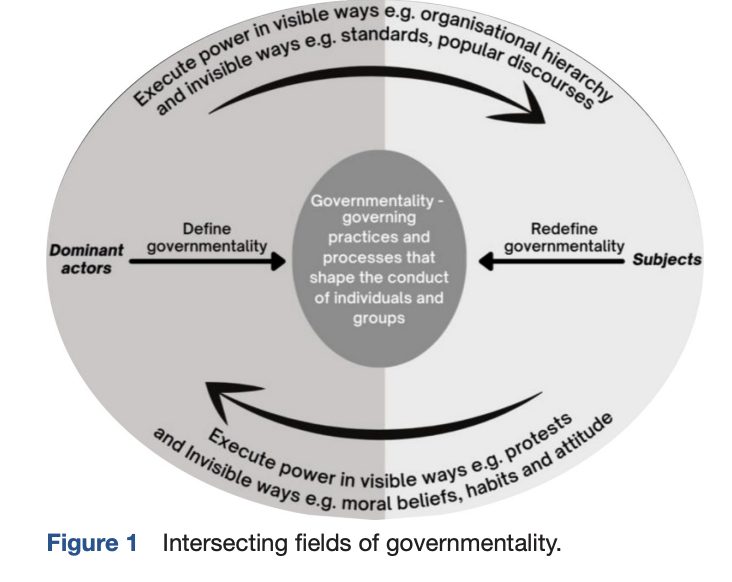
We used Foucault’s Governmentality approach as an organising/conceptual principle to understand and explain the case; Foucault’s approach urges us to look beyond specific loci of power in individuals/actors but to its “pervasive and multicentric” nature.
Foucault maintains that “…the governed do not easily question the status quo as the governing processes are internalised, for example, through norms, institutional practices and beliefs”
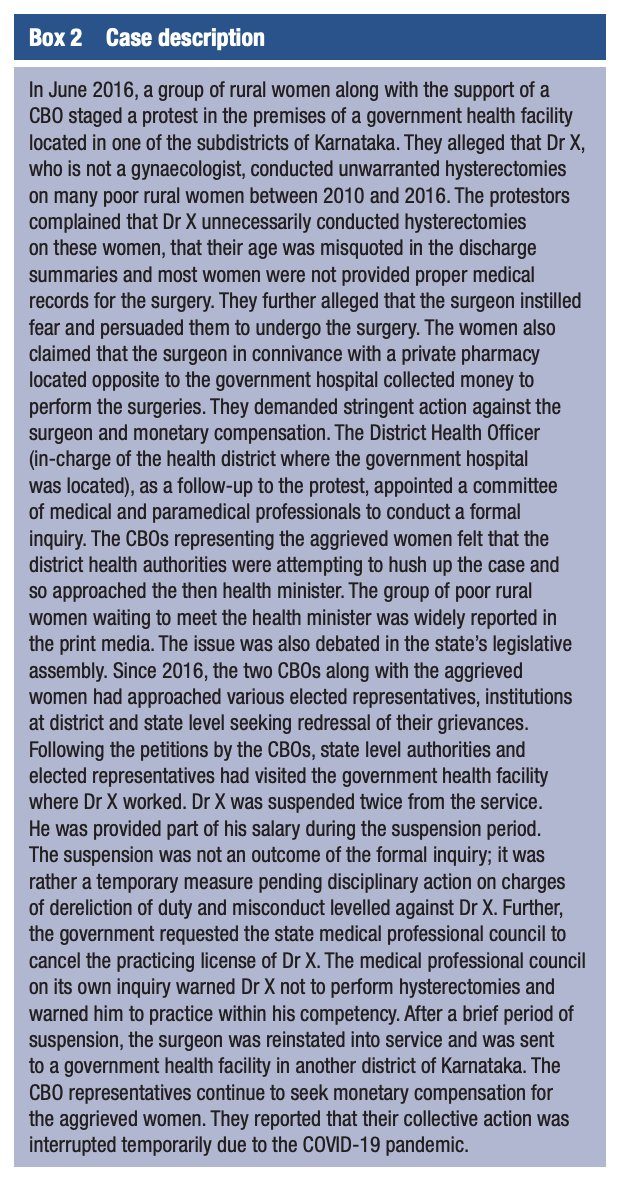
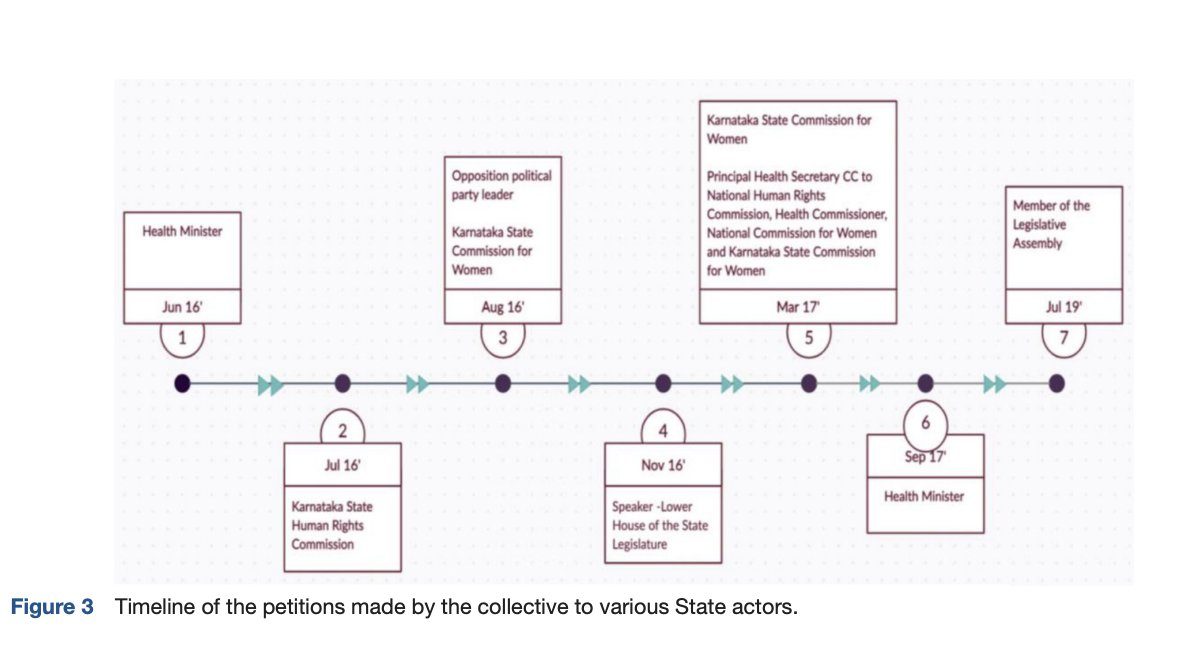
We examined the case of unwarranted hysterectomies on poor rural women in Karnataka about which a collective of these women with help of two community-based organisations has been seeking redressal since June 2016
“We find that the governmentality space in grievance redressal is mainly defined by the medical profession and the State bureaucratic apparatus.” We 1st describe micropractices of these actors & then show the collective of women pushed back to redefine governmentality
Wrt medical profession, findings suggest that they exercised substantial authority at dt & state level & their power was reaffirmed by medical professional councils & combined with political influence, they “shaped the course of formal grievance redressal processes”
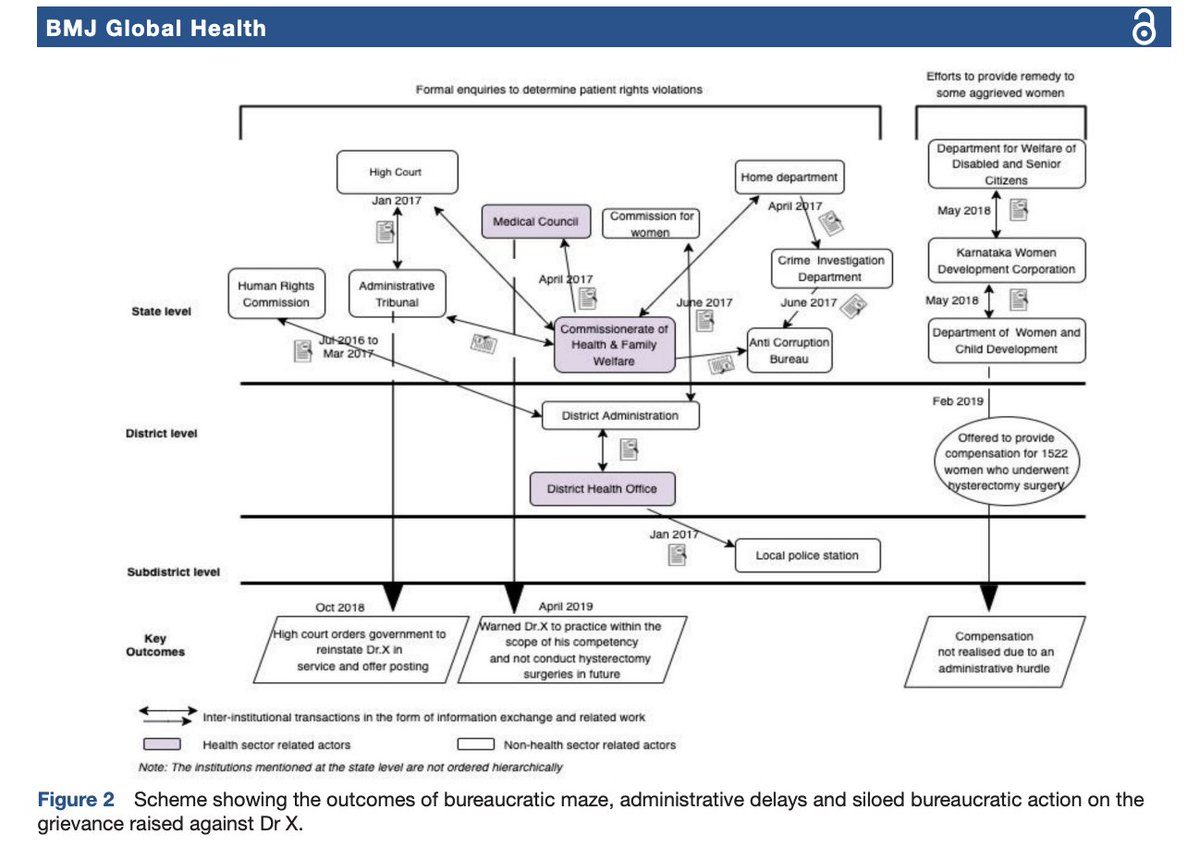
Either at diff points of time or simultaneously, 11 entitites dealt with the complaint; ultimately “labyrinthian bureaucracy hampering access, undue administrative delays & fragmented bureaucratic thinking & action on the grievances” see fragmentation👇🏾
With no option of formal redress, the women organised into collective, used protests, media engagement, appealed to multiple actors incl elected reps, persevered with inquiries to counter the dominant medical & bureaucratic power.
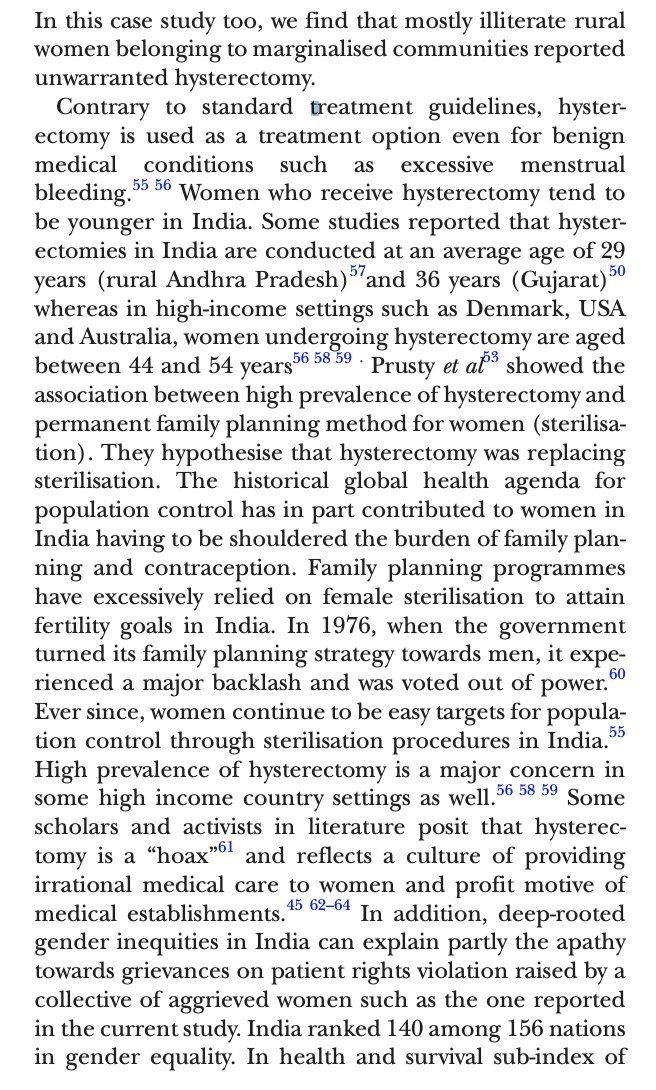
There’s a lot to be said about unwarranted hysterectomies; more so because its prevalence is disproportionately higher among the poor and often for benign treatable; age at hysterectomy too in India is lower (29 years avg age in Andhra!); see Discussion
This is but one case, and hopefully not an everyday once; however, we need to seriously re-think our grievance redressal systems & ensure patient rights; these are legally & constitutionally guranteed, but also trust in healthcare & health workers improves with patient rights
Original post: https://x.com/prashanthns/status/1530763916715999232 (ID 1530763916715999232). This note is the canonical copy of that post. Last updated: 2026-10-04 04:20