Evidence base for Kyasanur Forest Disease control: thread on our PLOS NTDs paper
A thread on our recent paper in @PLOSNTDs examining ecological evidence-base for DiseaseControl management practices for KyasanurForestDisease AcademicTwitter Scicomm OneHealth; paper led by @SarahBurthe from @MonkeyFever_ consortium
Diseasecontrol strategies originate through endorsements by Governments/academia/authorities; they’re often not field-tested robustly; even when they are, evidence is limited to one sector (cf. OneHealth Intersectoral approaches);
publichealth approaches ought to be contextual & their effectiveness ought to be evaluated, yet strategies for disease control often spread through word of mouth and are sometimes untested;
Zoonoses like KFD require inter-sectoral & inter-disciplinary understanding across human, animal & forest systems; an ecological understanding helps identify host factors for DiseaseControl as opposed to purely human factors (#vaccination for eg.)
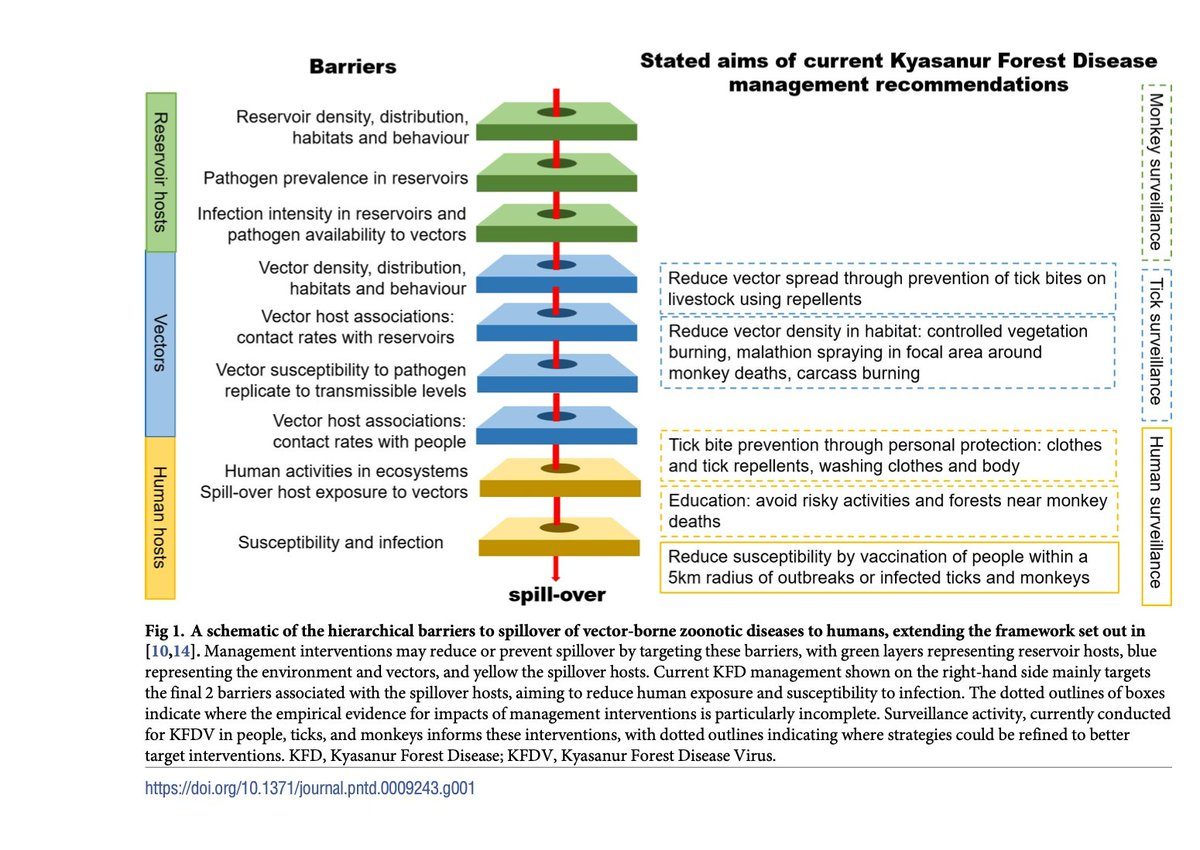
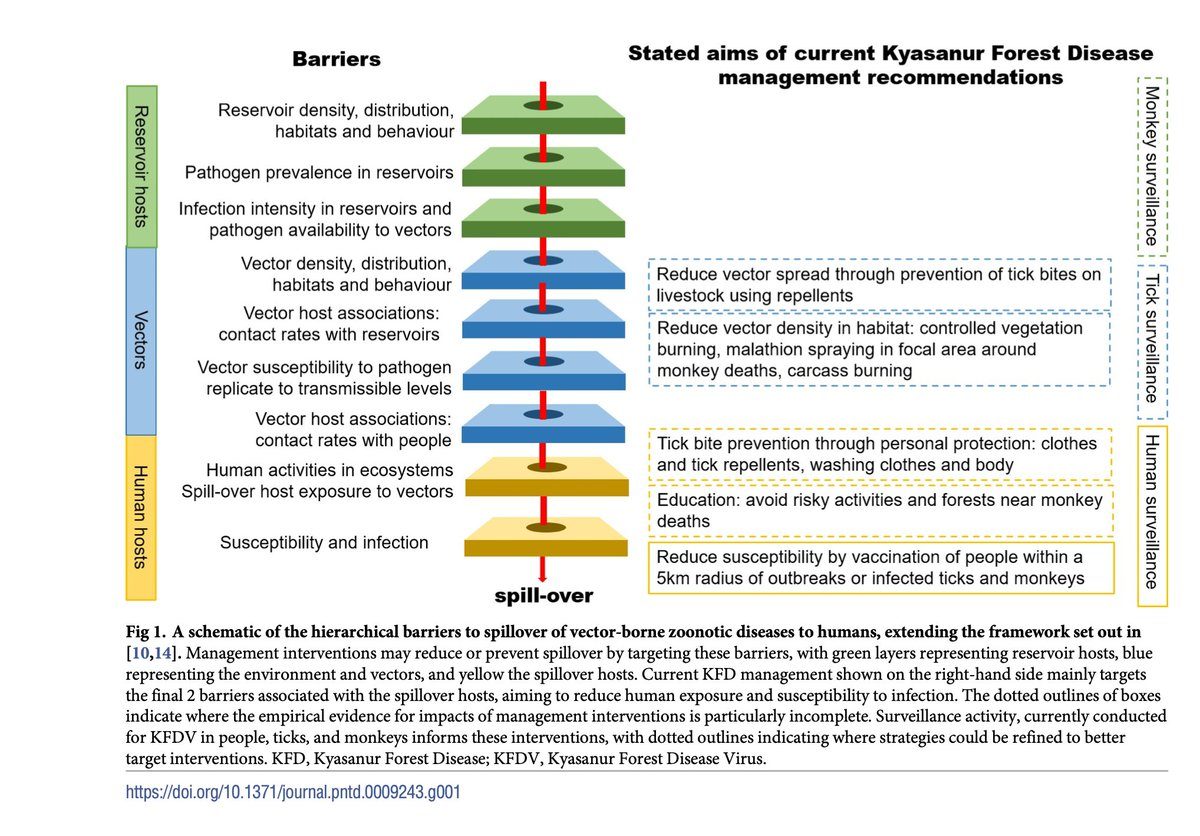
Spillover of pathogens from natural cycles of transmission to human settlements or within farm animals are at the heart of EmergingZoonoticDiseases; a hierarchy of barriers can be conceptualised for a hypothetical pathogen to navigate before human disease
spillover events become frequent given fast-paced macroeconomic growth models chosen by many tropical countries; although individual human behaviour is often exaggeratedly declared as the problem;
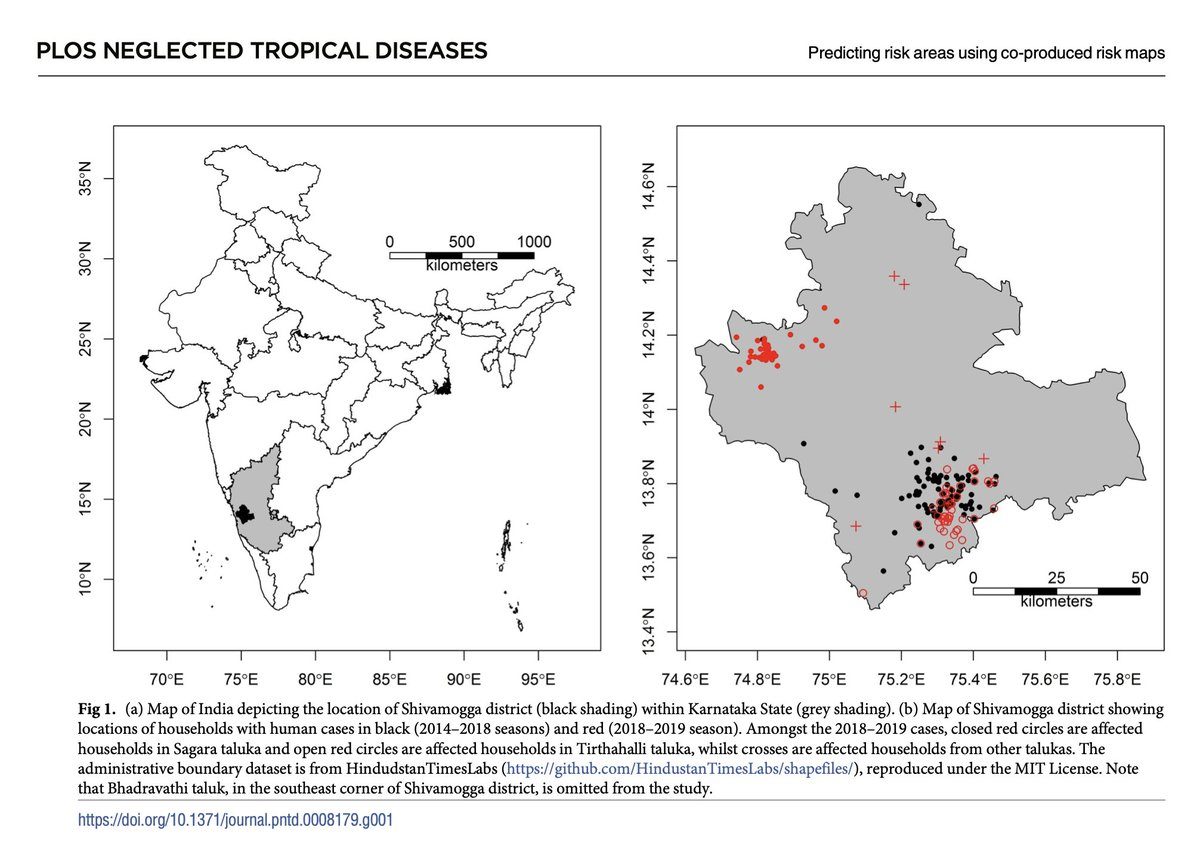
our earlier paper on KFD shows that sudden ecological change is good predictor of disease occurrence; large-scale conversion of moist deciduous forest into coffee plantation for eg. can’t be done by low-income & historically vulnerable communities https://journals.plos.org/plosntds/article?id=10.1371/journal.pntd.0008179
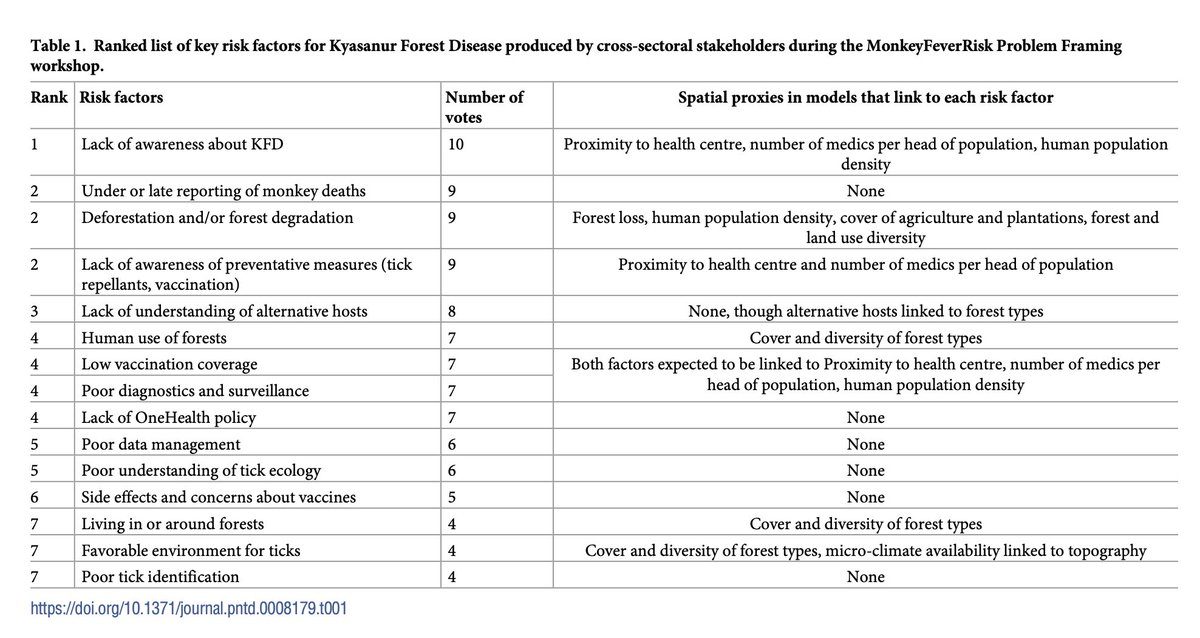
Recent large-scale ingress facilitated by Macroeconomic shifts rather than local community choice; whereas locus of interventions are “unaware”/ill-informed individuals; for eg. how our own stakeholders missed the forest for the trees in ranking awareness as the top rank!
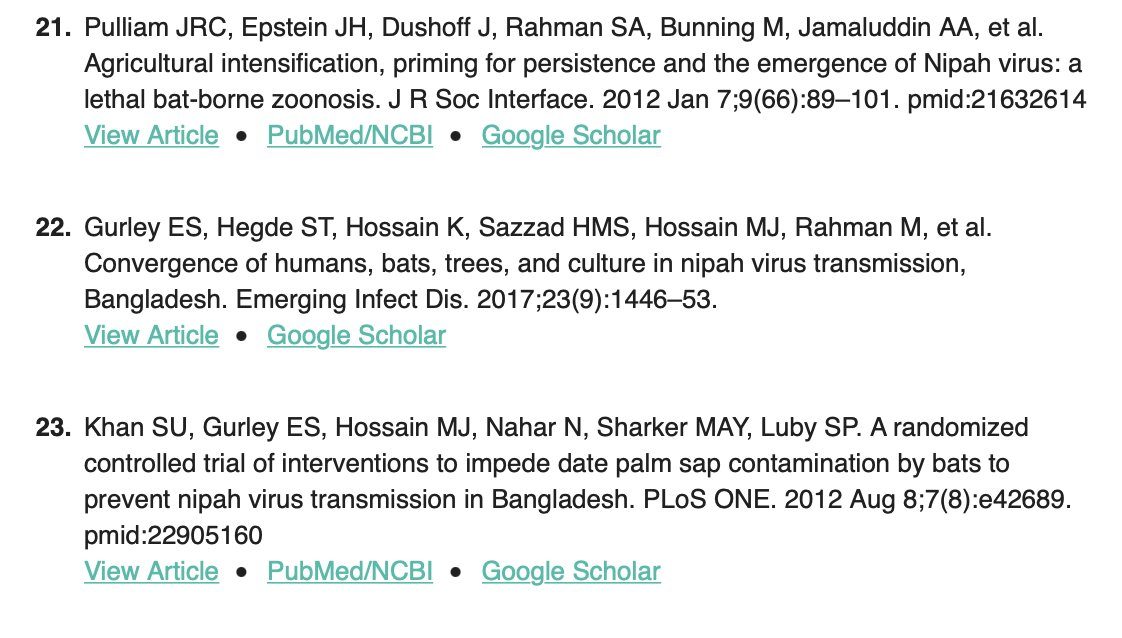
Recent NipahVirus work in Bangladesh shows promise in terms of expanding from conventional disease control approaches to more ecologically informed ones; see cited work
what we already know about KyasanurForestDisease: a tick-borne Flavivirus; causes debilitating illness with 10% reported fatalitiy; a haemorrhagic disease; expanding from original location in Shivamogga Karnataka (desc in 1957) spreading N & S along the WesternGhats
See this lovely article in @TheWireScience by @NithyanandRao that reads like a detective story about the “The Seven-Decade Transnational Hunt for the Origins of the KyasanurForestDisease https://science.thewire.in/health/kyasanur-kfd-rajagopalan-boshell/
See this article about recent kerala outbreak; which has only begun more recently; KFD was otw mainly reported from Karnataka, but now from Goa, Maharashtra too. https://scroll.in/pulse/821821/after-wayanad-lost-11-lives-to-kyasanur-forest-disease-last-year-its-staring-at-another-outbreak
Largely affecting LowIncome remote/forest-dwelling communities; small land-holding farmers, plantation workers, Adivasi; 69% of survey respondents reported livelihood stress (see below)
being a “new” disease with limited traditional knowledge support hence creating new vulnerabilities among communities already coping with other social stresses; see our recent article also in @PLOSNTDs on this https://journals.plos.org/plosntds/article/comments?id=10.1371/journal.pntd.0009265
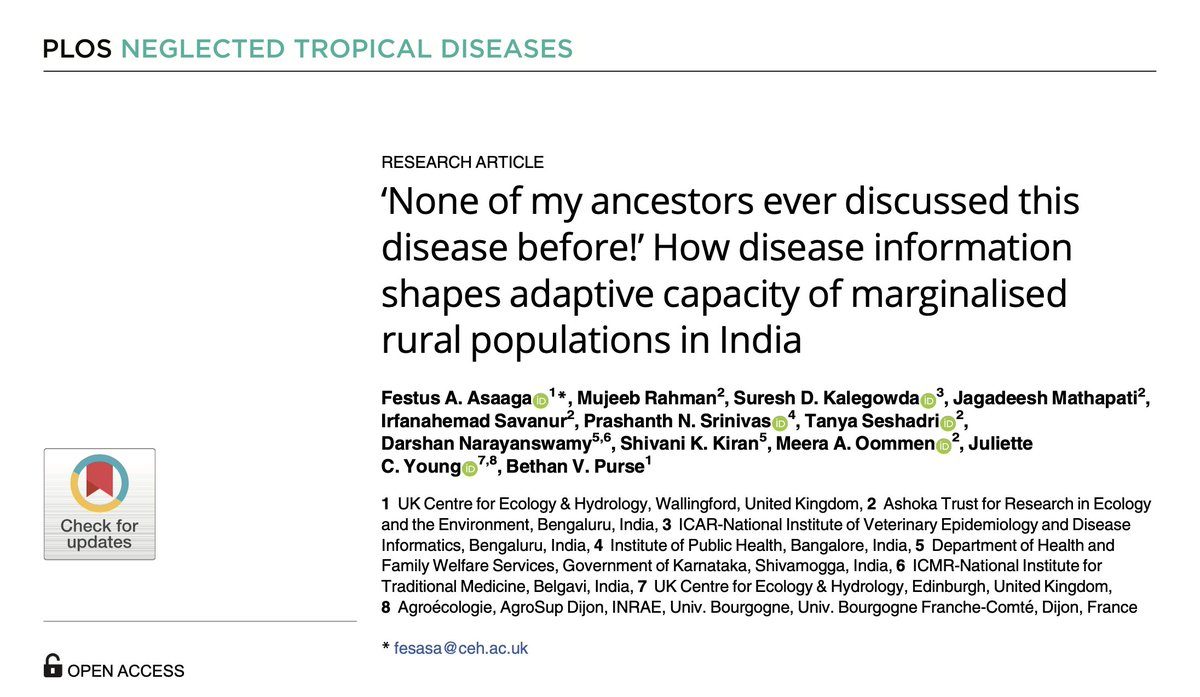
Based on the above paper, our colleague @Festus_Asaaga wrote a thread on how disease information on KFD shapes adaptive capacity in this landscape here: https://x.com/festus_asaaga/status/1376831115621728264?s=21
Back to KFD: Complex transmission cycle with multiple tick species possibly involved, in addition to the main culprit Haemaphysalis spinigera (possibly some Ixodes too); multiple hosts too: wild rodents, shrews, bats, monkeys and birds;
laboratory-based transovarial transmission from adult female to offspring reported albeit not confirmed in the wild; ticks bite an infected host or acquire from other infected ticks; human infection is a dead-end (for now) & no further human-human transmission ensues;
every human KFD infection is thus a spillover where we “end up” in the middle of an otherwise wild cycling of the pathogen.
Local monkeys, primarily GreyLangur & BonnetMacaque possibly amplify by producing high titres of virus and thus becoming nuclei for widespread transmission through ticks around them to other wildlife/human;
cattle develop infection but don’t amplify & don’t have virus for long duration too, more on this later;
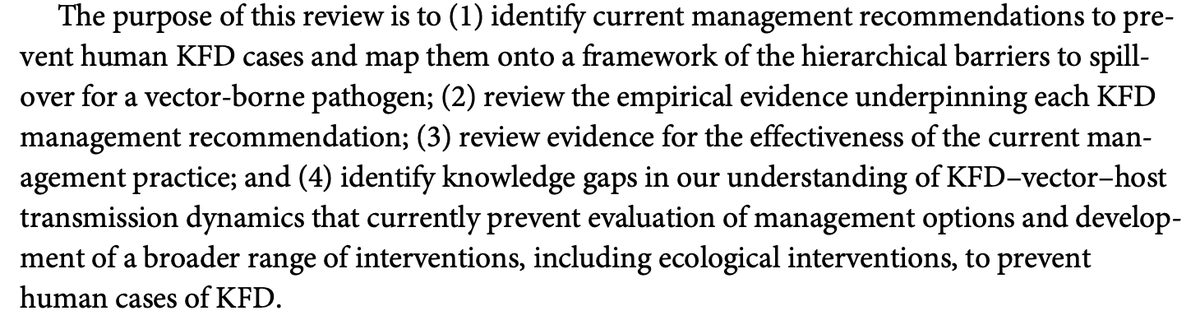
These two hypotheses, (1) role of monkeys, (2) role of cattle is based on work done decades ago with limited recent socio-ecological work and in that context this paper with the following objectives
We searched PubMed & @webofscience with keywords including the big one Kyasanur (the village where it was first reported in 1957); also interviews with district & taluk publichealth managers from @DHFWKA which is spearheading response to KFD
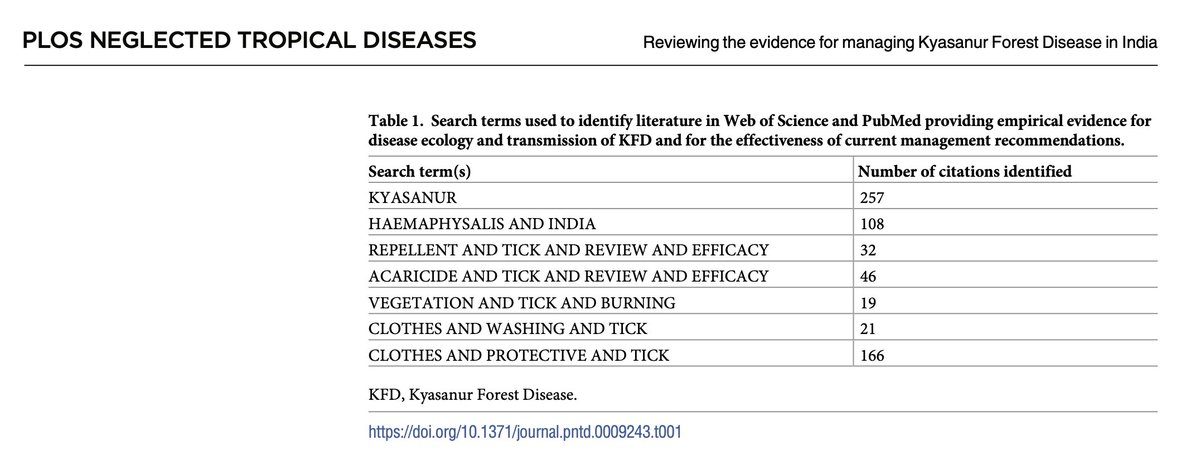
We also analysed data exchanged in a “community of practice”, a Whatsapp group of KFD-interested stakeholders
For effective spillover, several factors related to arthropod vector ecology, its abundance and recent changes, reservoir hosts abundance and behaviour, human immune system & human behaviour need to come together
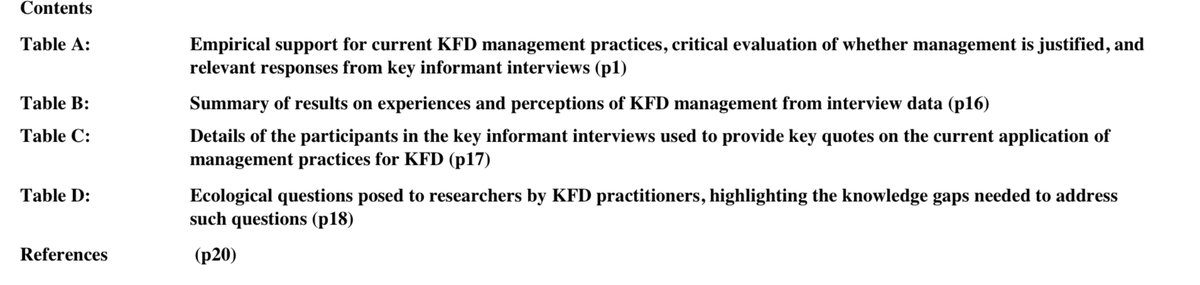
2 key guidance documents relevant to KFD control, both from Indian PublicHealth sector we analysed: (1) NCDC (GoI) guidance bulletin & @DHFWKA manual; see Appendix for details of empirical support for current management practices https://figshare.com/articles/journal_contribution/S1_Appendix_-/14357890
Using a traffic light system, we categorise strength of evidence for DiseaseControl practices that have been “normed” into practice & considered effective against KyasanurForestDisease; only 5 of 15 have sufficient empirical support;
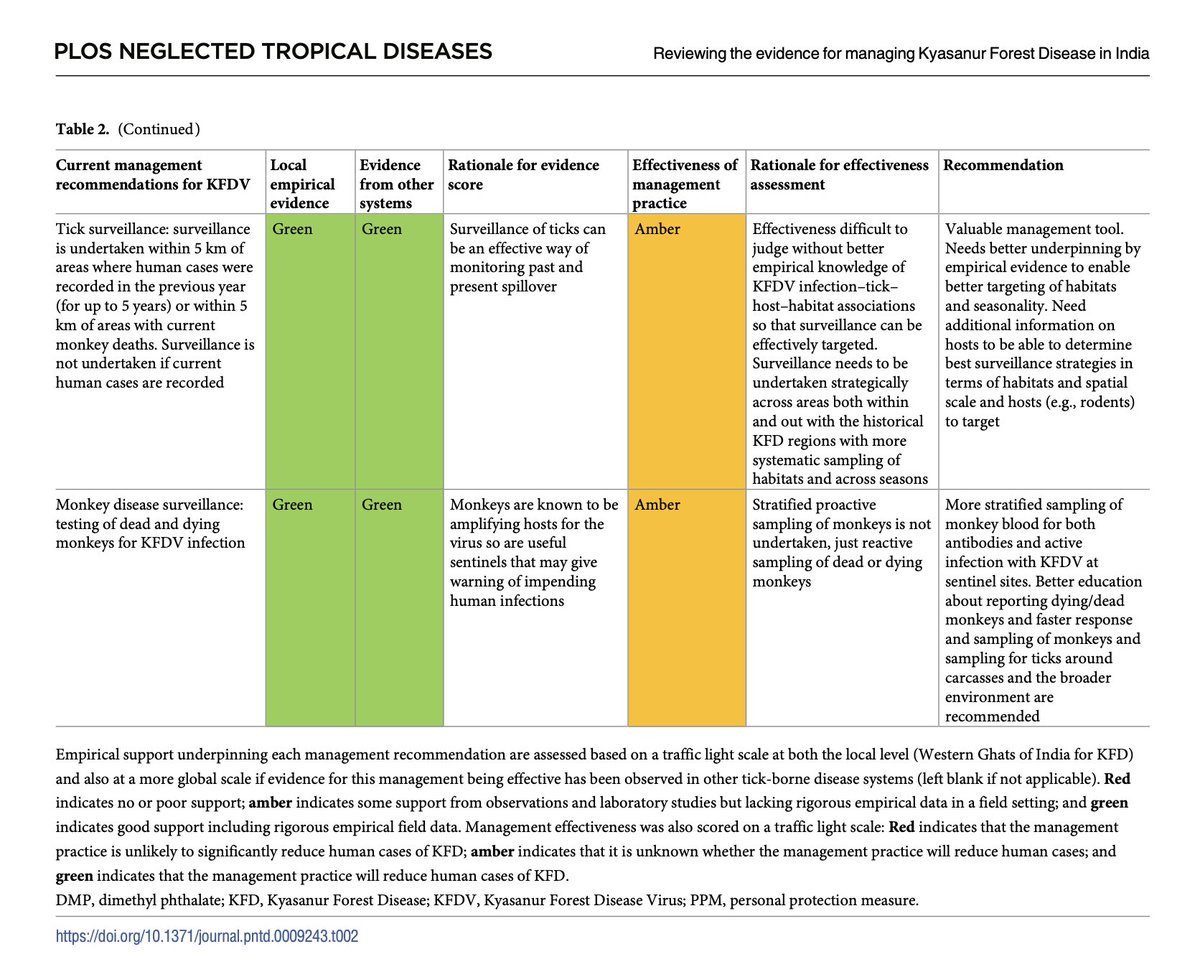
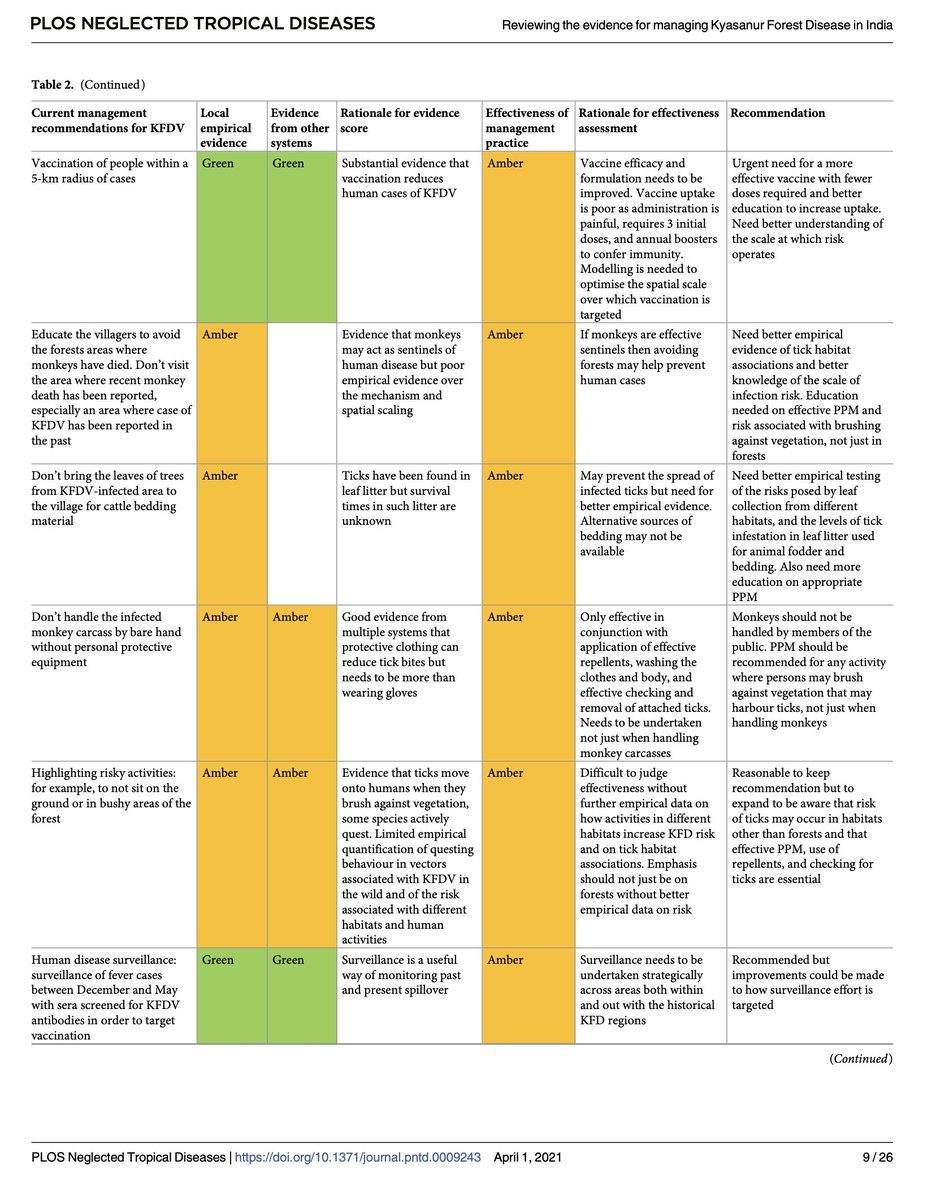
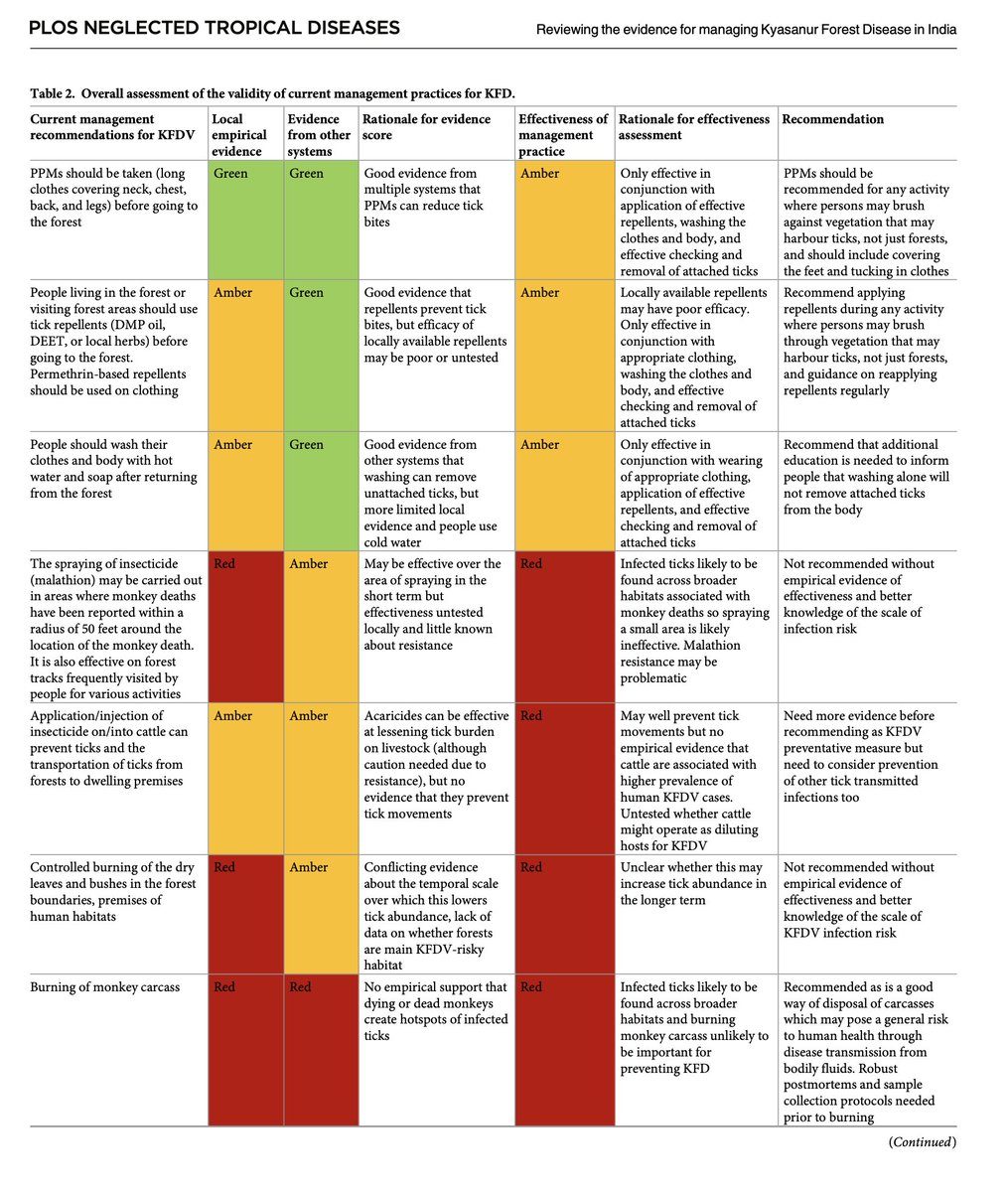
Among key practices lacking evidence is for eg. spraying of Malathion insecticide within radius of 50 ft of monkey deaths; this is a practice that probably is high on “feeling reassured” that something has been done, but with poor empirical basis;

Controlled burning of dry leaves & bushes in forest boundaries too has poor evidence support (poor systemic basis for an assumption that such “edges” are where “spillover” occurs; as if ticks are exclusive to “forests”; ecological continuity in agro-forestry landscapes

Burning monkey carcass too may not mean that infected ticks have been eliminated (given our understanding of tick ecology);

Education on avoiding forest visits, bringing home dry leaves have “some” (Amber light) evidence-base; but this is deeply connected to local livelihood security so evidence trade-offs applying to us researchers & those applied by communities will vary
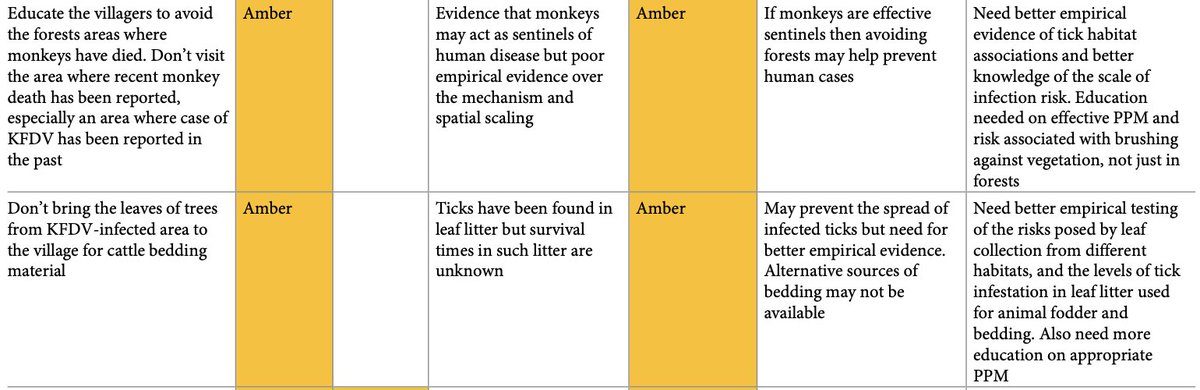
Other recommendations such as “Dont handle monkey carcass without PPE” may have limited value unless personal protection is expanded to range of other practices even outside of handling carcases (hence our Amber)
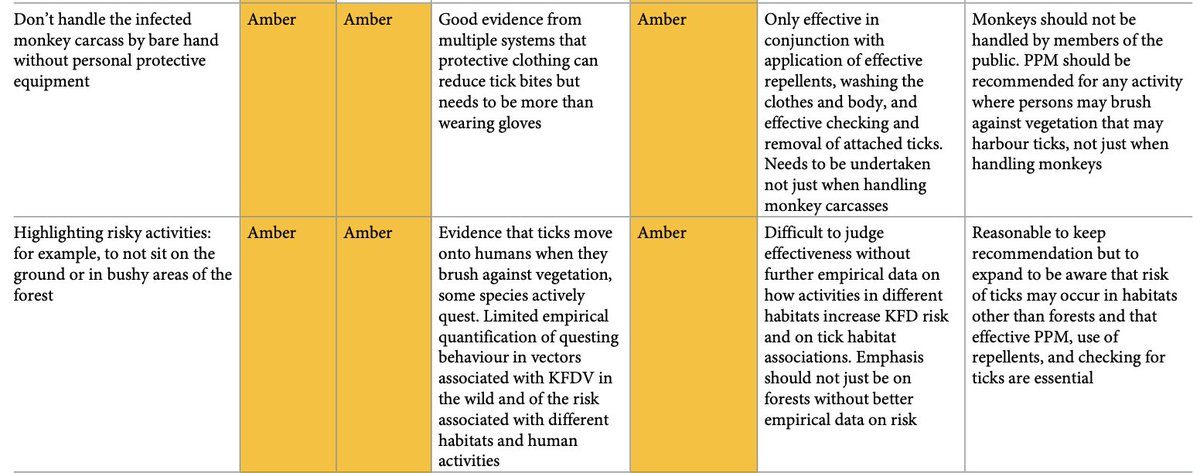
Human disease surveillance currently limited to specific geographies and in Dec-May months may also need re-look in favour of more widespread and responsive surveillance

We identify key research priorities for each of the barriers identified in figure above: (1) preventing tick bite to people, (2) vector density & ecology related, (3) limiting vector-host (animal) associations,
(4) human activity in disease eco-systems, (5) pathogen factors in relation to reservoirs & vectors, (6) reservoir density & ecology, (7) susceptibility of spillover host
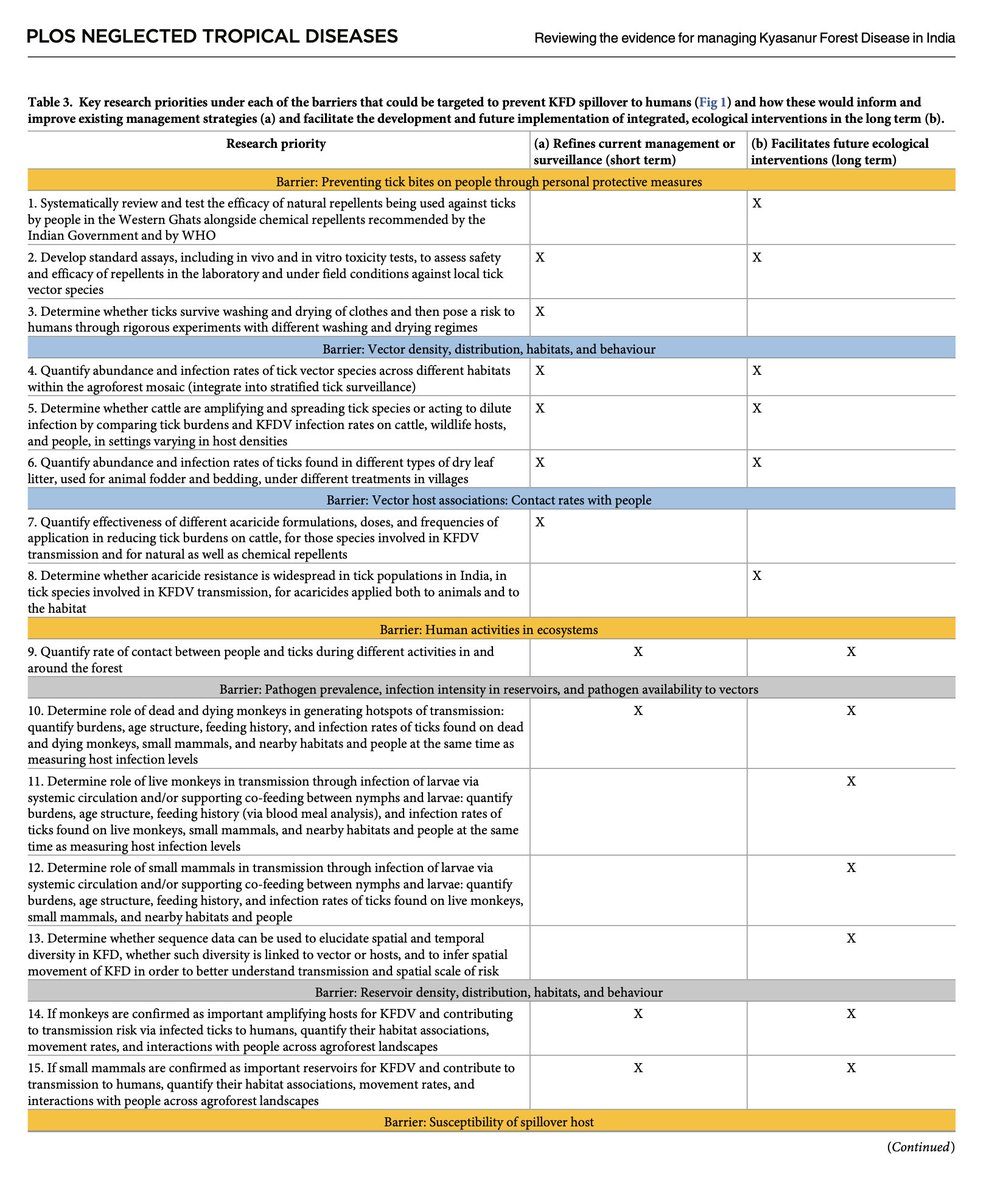
Key discussion from our findings: Limited understanding of effectiveness of locally available repellents, some of these are natural repellents (#TraditionalKnowledge) but limited scientific evaluation;
locally used repellents include Malabar Catmint Anisomeles malabarica which does have efficacy against Haemaphysalis ticks unrelated to KFD ones; need toxicity & in vitro & in vivo studies of how ticks respond in different environments
Tick responses to washing (do they survive?), drying around houses (do they die off/fall off? if yes, how long do they remain? how infective are they?)…these are yet unanswered questions
Tick abundance & infection rates in agroforestry mosaics in WesternGhats poorly understood; need more fine-scale studies which better characterise tick ecology in diverse micro-habitats; eg. current tick surveillance limited to forests may not be adequate & is not OneHealth.…
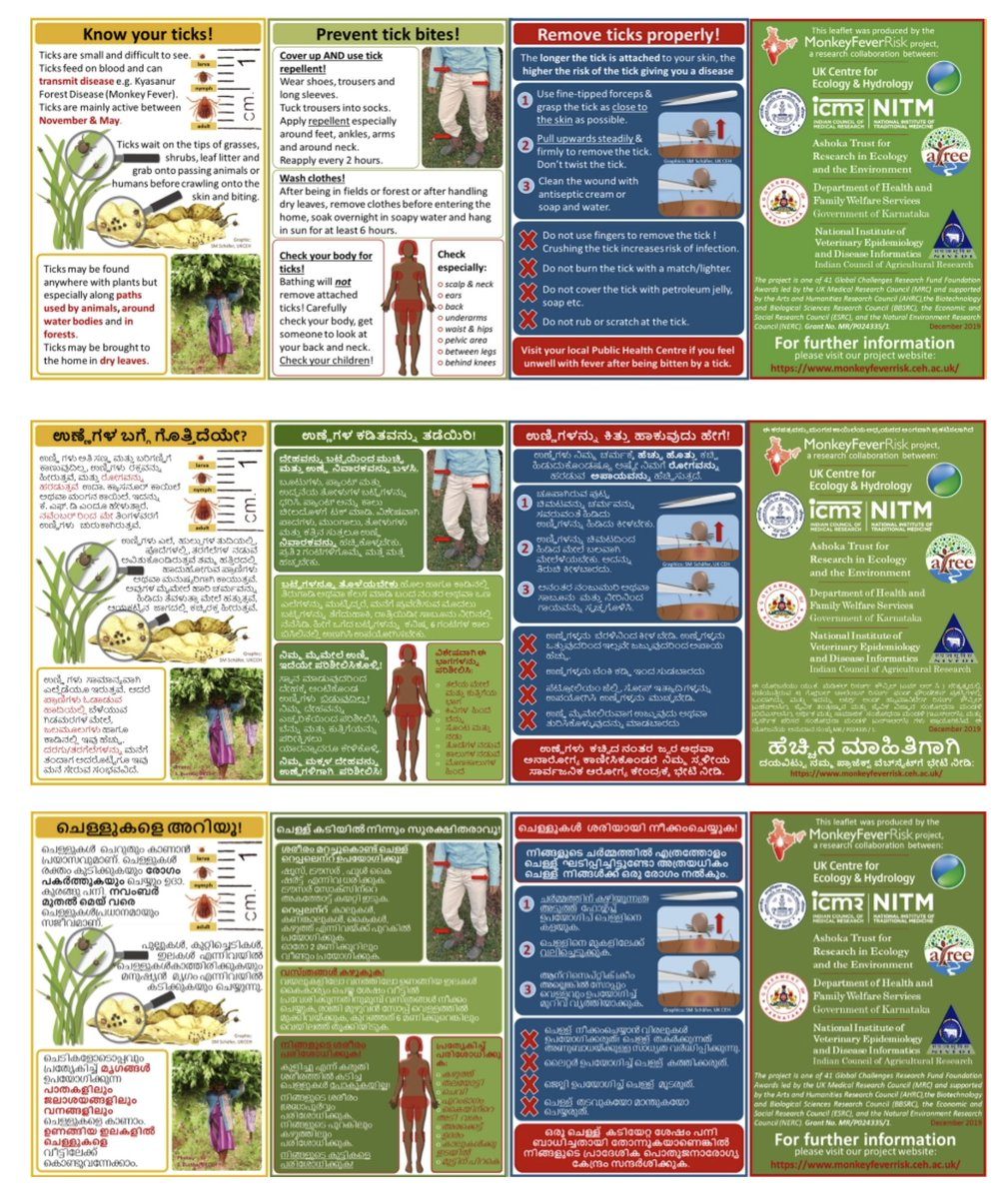
…Educational leaflets & videos need to involve local communities; emphasise on full-body inspection and removing ticks, preventing bites, seasonal change in forest visit/exposure (cf. current efforts focus heavily on vaccination)
We developed some community guidance in Kannada & malayalam which are available here https://www.monkeyfeverrisk.ceh.ac.uk/kfd
Key discussion from our findings (2) on preventing tick spread by cattle; cattle support large number of ticks, but not all of them support KFD transmission; cattle may amplify, but they may also “dilute”/disperse…may be micro-context dependent;
In areas we worked, cattle grazing is small scale (mean 2.5 per household); more studies in these landscapes needed to see what deterrents if cattle will amplify or dilute tick abundance;
excluding cattle from forests is not always feasible for farmers; so what PP measures needed for cattle & accompanying people? And such changes will impact livelihoods, so compliance with our “awareness” inputs is not stright-forward
There are possible unintended positive effects of KFD measures in limiting Lyme disease, tick typhus, babesiosis, theileriosis and anaplasmosis as pointed out by others (see ref 76-80)
Key discussion from our findings (3,4 & 5) related to handling of dry leaf litter discussed above; also related to controlled burning of dry leaves, burning of monkey carcasses & malathion spraying discussed above; all with poor empirical support
We also discuss the need for fundamental ecological research for exploring role of alternate mammal hosts, especially small mammals & birds; characterising resistance to Malathion also a need;
Apart from these ecological measures, basic vaccine research and innovation, widespread efficacy studies, genetic diversity assessment of KFDV are all important areas yet to be addressed; vaccine immunity duration is short and requires multiple repeated doses;
KFD vaccine is akin to an orphan drug given limited “market”, there is no rush to solve this problem; will have to be tackled via public funding and political will (cc: @ICMRDELHI @DNDi @MoHFW_INDIA WHOTDR (#NTDs)
Key discussion from our findings (6) need for long-term surveillance of people, ticks and monkeys in select sites; need for setting up OneHealth surveillance sites; perhaps @moefcc’s vision to set up National Mission on biodiversity & human wellbeing may address this?
*Part of Zoonotic diseases, OneHealth, Planetary Health & such. Originally posted on X on 8 Apr 2021 as a thread of 50 posts (https://x.com/prashanthns/status/1380085137208180739)
Last updated: 2026-10-04 04:20