The COVID-19 third wave expert committee: who was in the room
Thread on High Level Expert Committee for Prevention & Management of COVID 3rd wave chaired by DeviShetty & nearly allmale & clinician led committee with hardly any diverse expertise needed (covered in my earlier thread which fell on deaf ears @BSYBJP @mla_sudhakar);
My view based on my training in medicine & PublicHealth & what I have learned through several years of CommunityEngagement & PrimaryHealthCare in rural Karnataka Chamarajanagar;
While the original notification was all men, 2 women seem to have been added; the summary of the report is about 30 pages while the “detailed recommendations” are 60 pages; rather poor attempt at summarising IMO
preface says various “disciplines of medicine” were included which is overly narrow for a social & community crisis that we saw; the ToC of topics covered shows total lack of a coherent framework in defining the technical inputs; clearly public policy expertise lacking
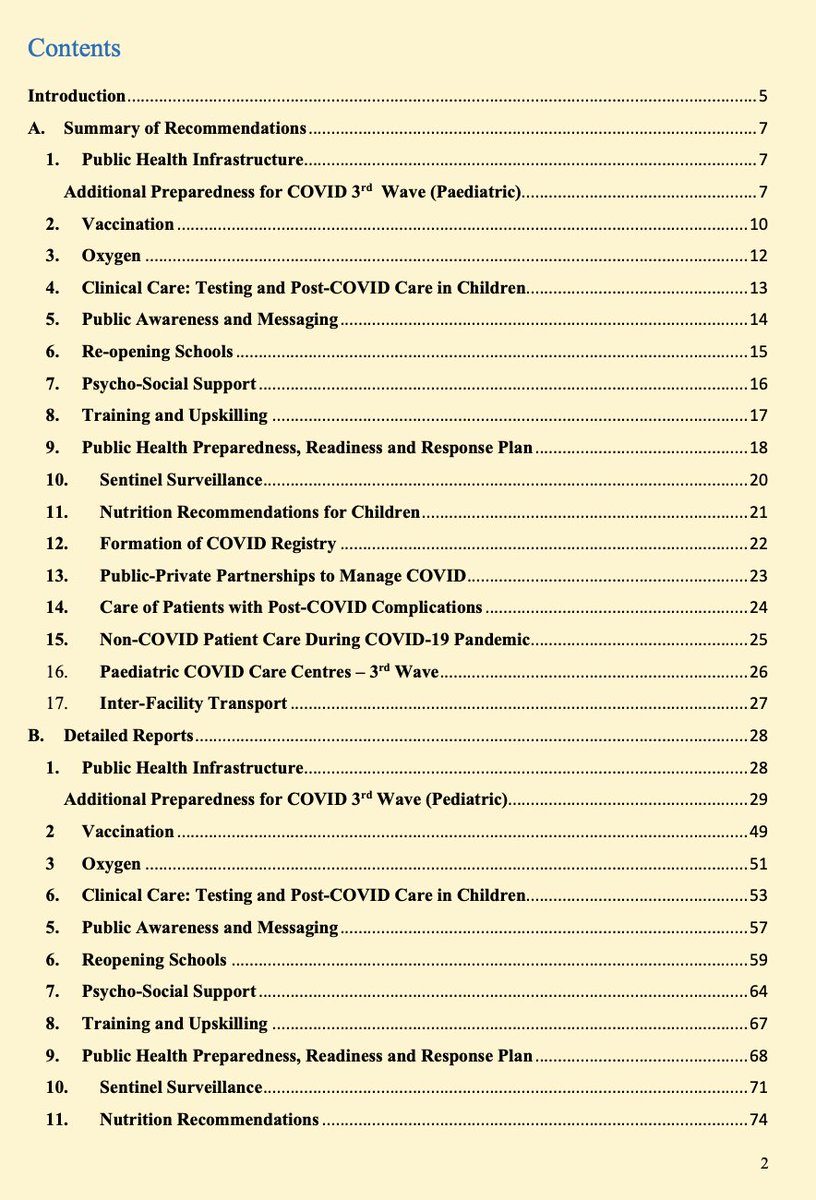
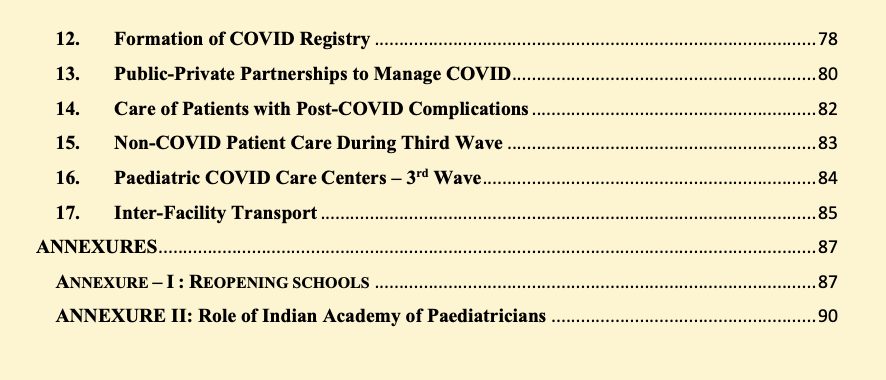
Given that report has private-sector & corporate membership (Chair himself!), one would have expected an articulartion of “principles”/values/assertions that underly choice of recommendations; NONE listed; did you expect disclosures? NONE
report is a list of bullet points; under PH infrastructure, committee makes “list for procuring drugs including consumables”; an operational detail which does not normally need a committee of experts; @DHFWKA already has/ought to have such capacity;
Total lack of ANY structural reform; a huge missed opportunity; be it the Public health cadre need that’s been suggested for 2 decades now & having good qualaity evidence for; instituting a hospital manager cadre for eg lacking; a good quality HR management system…none!
A1. Public health infrastructure & HR: no structural reform, usual stuff on expansion of infra & filling up of vacancies (none of these need expert committees to tell us); complete lack of understanding of what is Governance on which more below
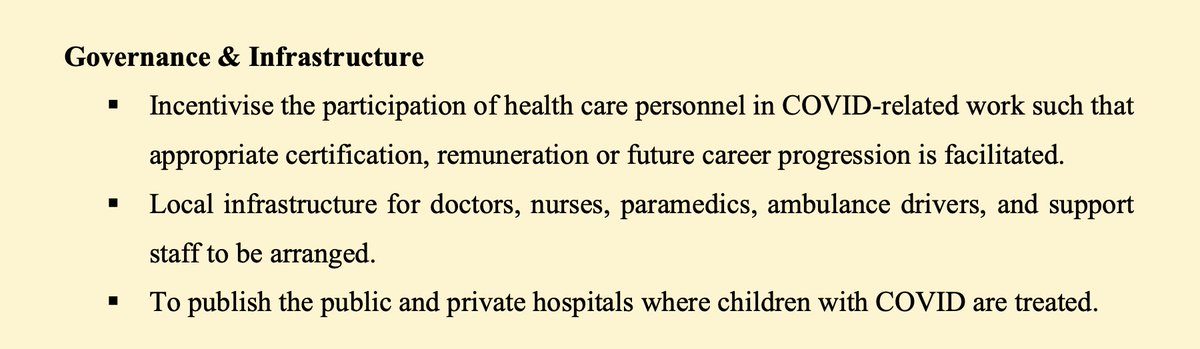
The recommendations under Governance demonstrate lack of expertise in the Chair to be able to guide/conceptualise Public health; this is not surprising; furthermore for a corporate head to make recommendations on Governance w/o consultations or including experts is wrong
Under recommendations for upgrading medical colleges, more vacancy filling; NOTHING on the poor technical & clinical leadership from medical colleges and how to improve that, limited convening function of current Community Medicine depts at district level decision-making?
Not a MENTION of the Chamarajnagar oxygen tragedy where at least 28 died at a medical college hospital; what did we learn? How do we prevent this in the coming days? Did nobody bring this up?

Section 2 on Vaccination strategy is entirely focused on urban middle class Bangalore save for “Whole of community” should be involved (how does this work?); only meaningful recommendation here is on micro-planning Bravo!

Under vaccination sites, here is an interesting suggestion to NGOs: “Encourage NGOs to provide refreshment at the vaccination sites.” (🙄 ) and some plain common-sense offered; any data-driven stuff on this? any analysis of measles/polio at GP level? NOTHING
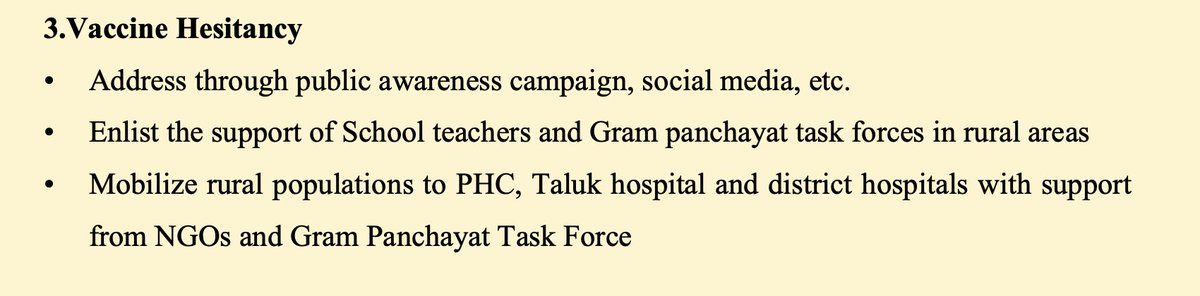
On vaccine hesitancy, I have read good quality high school essays that are more meaningful; again NGOs thrown in as some entity that magically can “mobilise rural populations” (what do they think rural populations are? sheep waiting to be “mobilised” by NGOs?)
More common sense under under cold-chain management & clinical management & adherence. Did we need an expert committee for this? Is it possible that the job was done by unmentoried/unsupervised juniors?
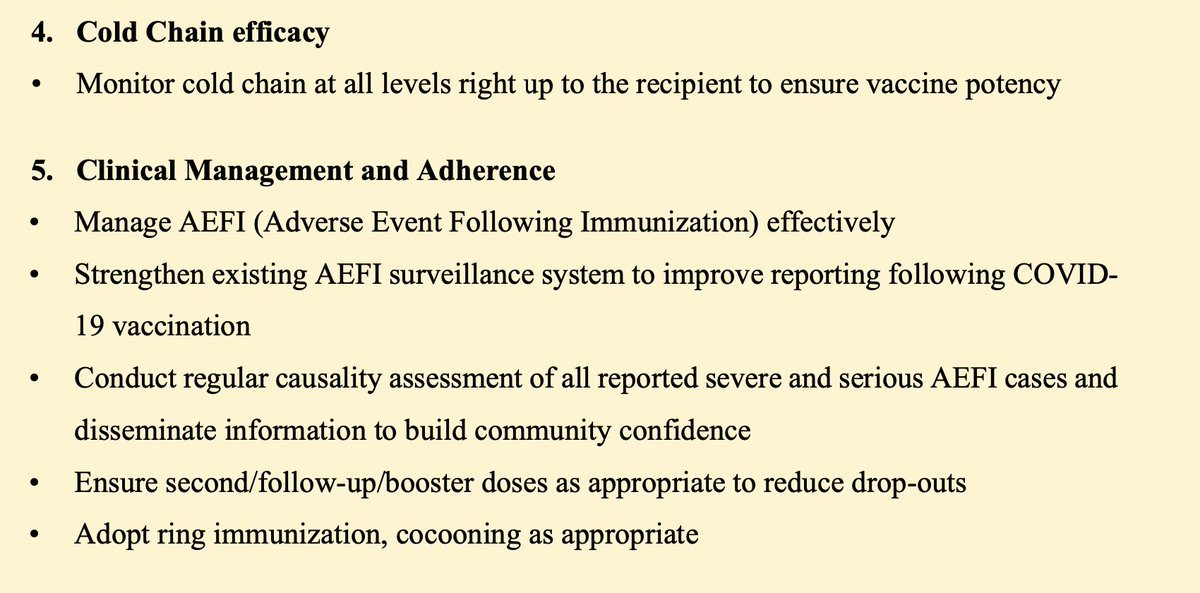
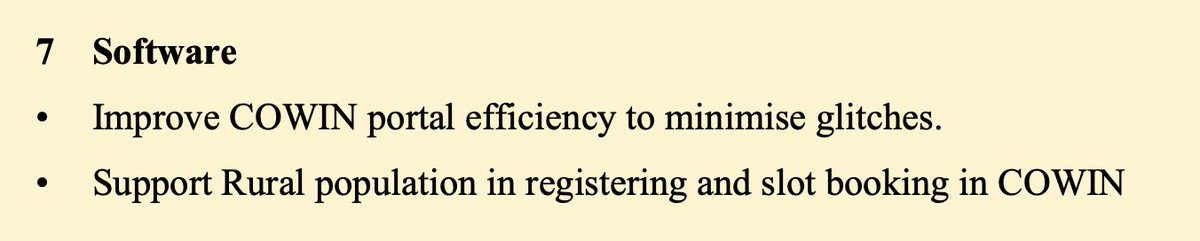
Such deep-seated ignorance and stereotype of “rural communities”; this heterogenous term has been stereotyped basically to indicate one thing: they need help for “slot booking” on COWIN! (Was the Chair unaware of the current walk-in strategy widely deployed?)
Under a theme titled “Software” 2 bullet points belie a lack of understanding of both software or its social realities; and by the way, for them COWIN is the ONLY software;
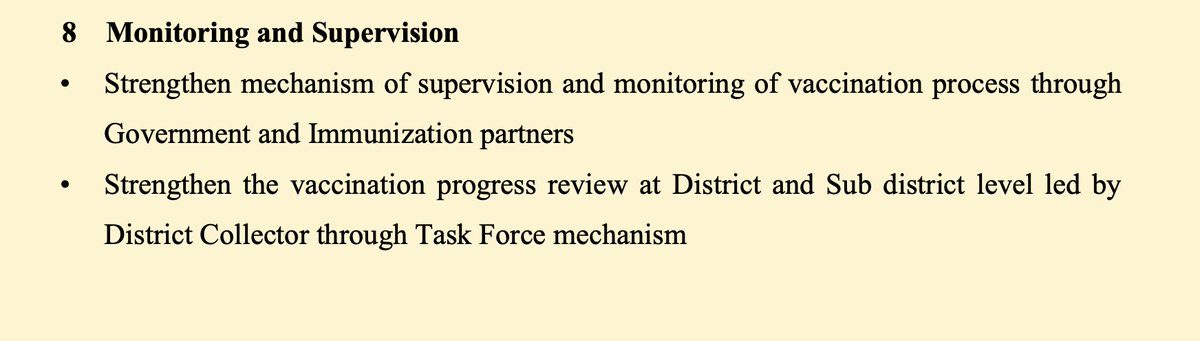
An eg of the lack of deeper engagement with details/lack of expertise in the M&E section: here was an opportunity for the expert committee to go into details of how district & taluka reviews can be made more effective; instead more common-sense assertions “Strengthen”;
In oxygen section, some focus on piped oxygen supplies in govt & private hospitals (low interest COVID package loans suggested for private hospitals); some good bullet point recommendations on oxygen concentrators but so few details?
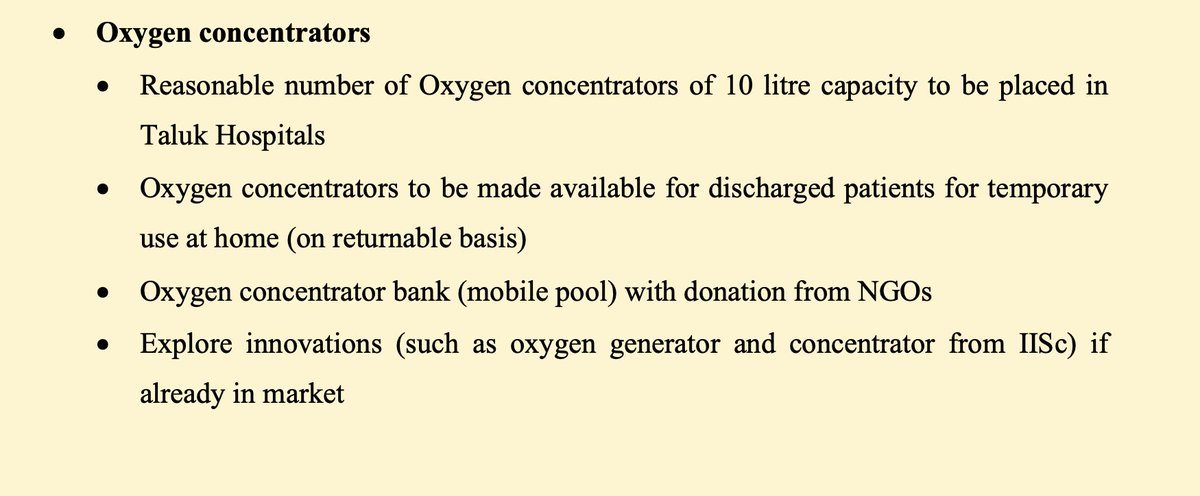
Why have an expert committee if it can’t come up with some templates/guidance and clear “new way of doing things” or a different way of doing things or lessons learned?
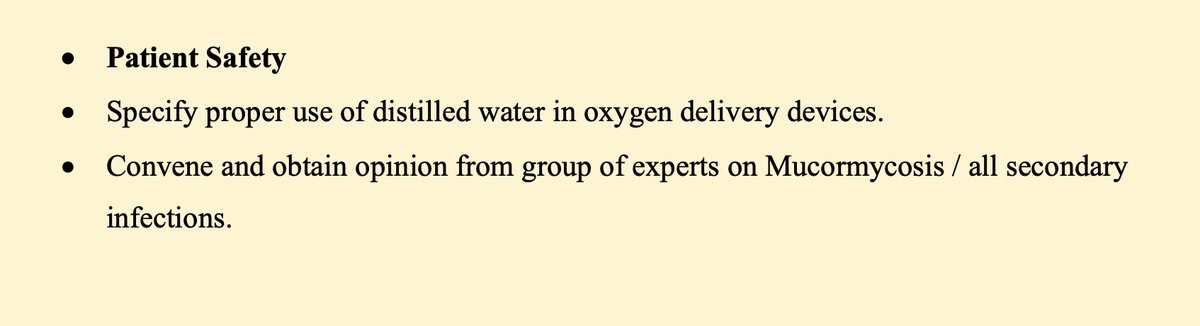
Such a narrow view of fundamental public health concepts; see below for eg. 2 recommendations under “Patient safety”
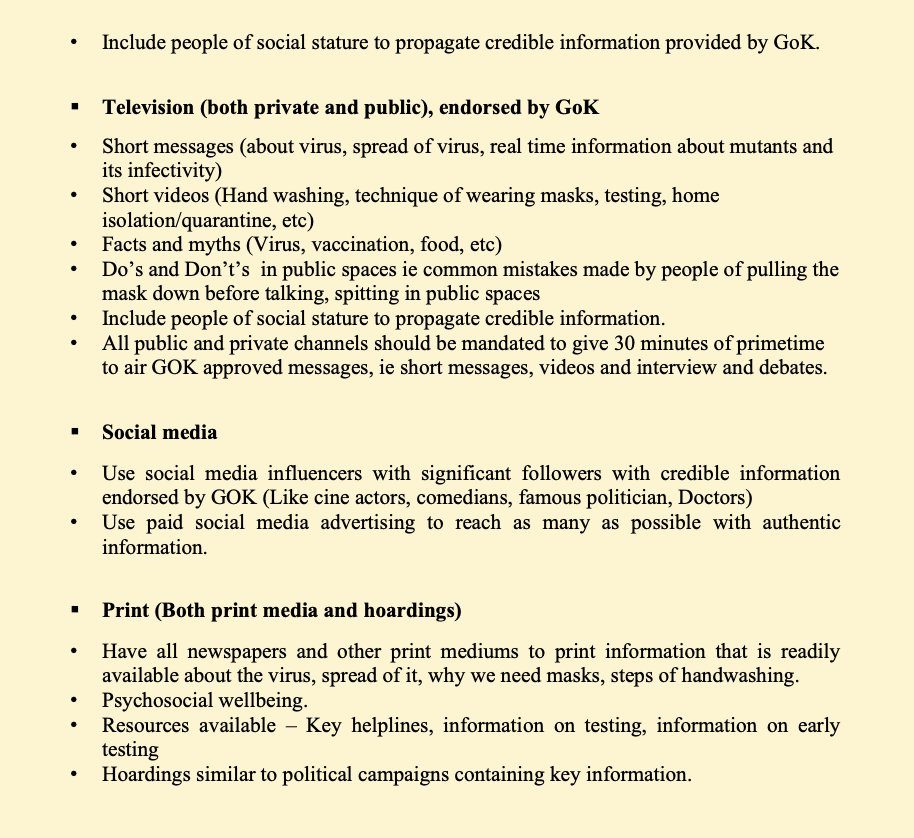
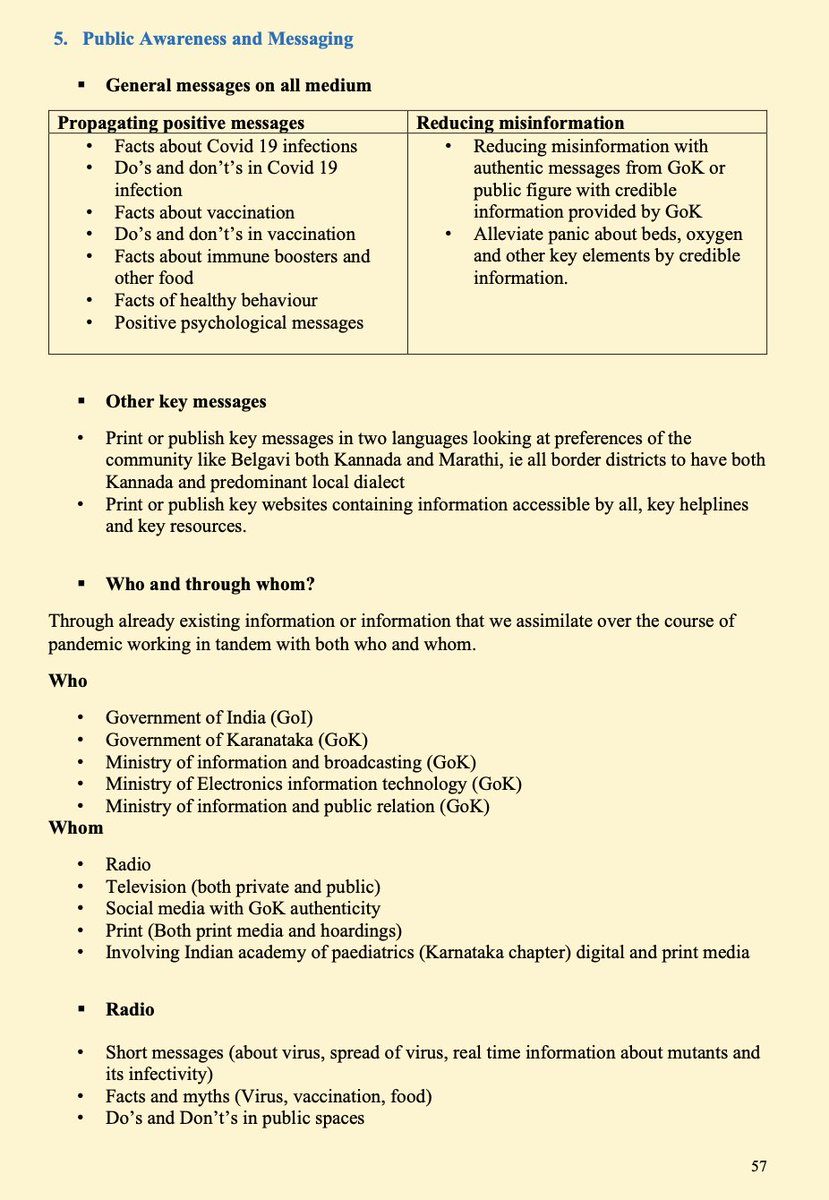
pages on public awareness & messaging appears mainly targeting urban middle class communities with limited opportunities for actually “engaging” & involving people; instead just passive information offloads; also these are rather generic IEC/campaign mode stuff;
pages of psycho-social support is rather well written & important; but short on implementation detail on how to roll out in health & WCD departments across state; which are the specific staff at district & taluka who will receive this training?
How will these integrate into care-seeking processes at PHCs & taluka hospitals? That’s why the need for wide spectrum of public health & community medicine expertise needed
The only section that addresses “lessons learned” is the 3-page section on PH preparedness; heavily biomedical with limited engagement with particular vulnerable populations;
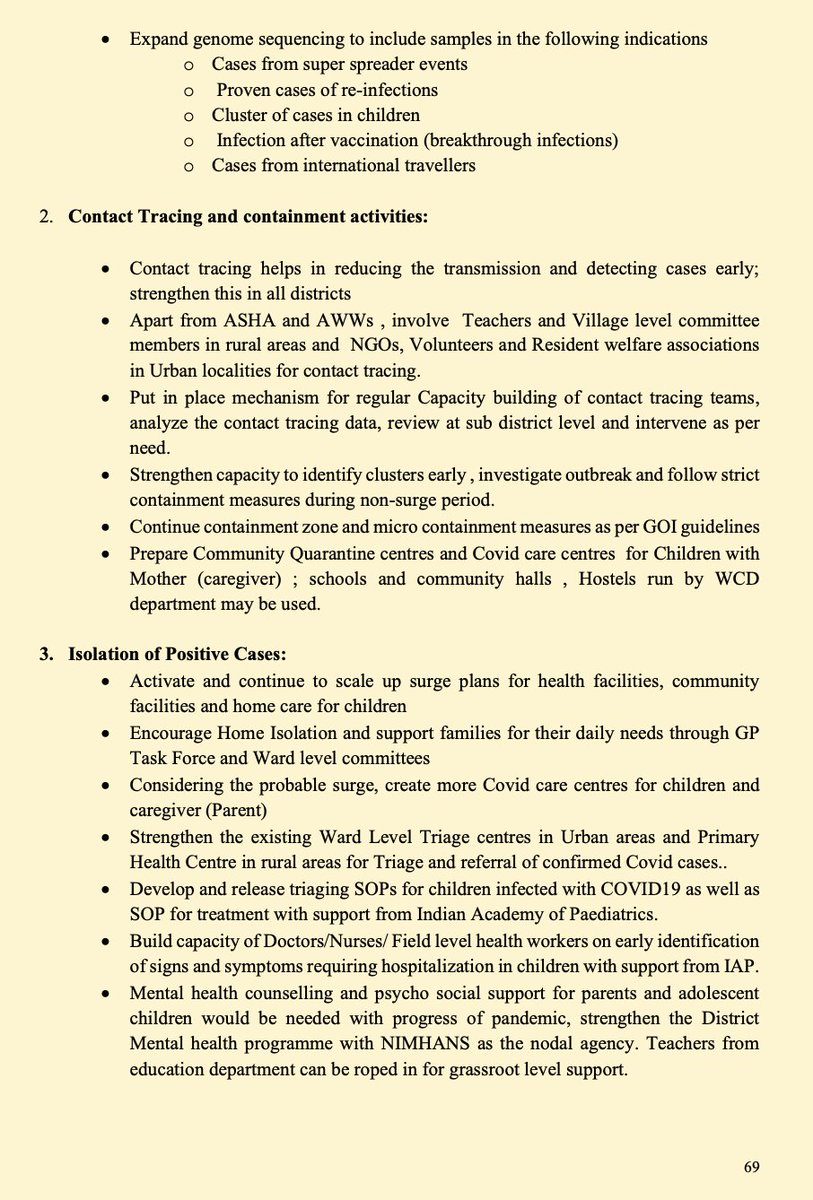
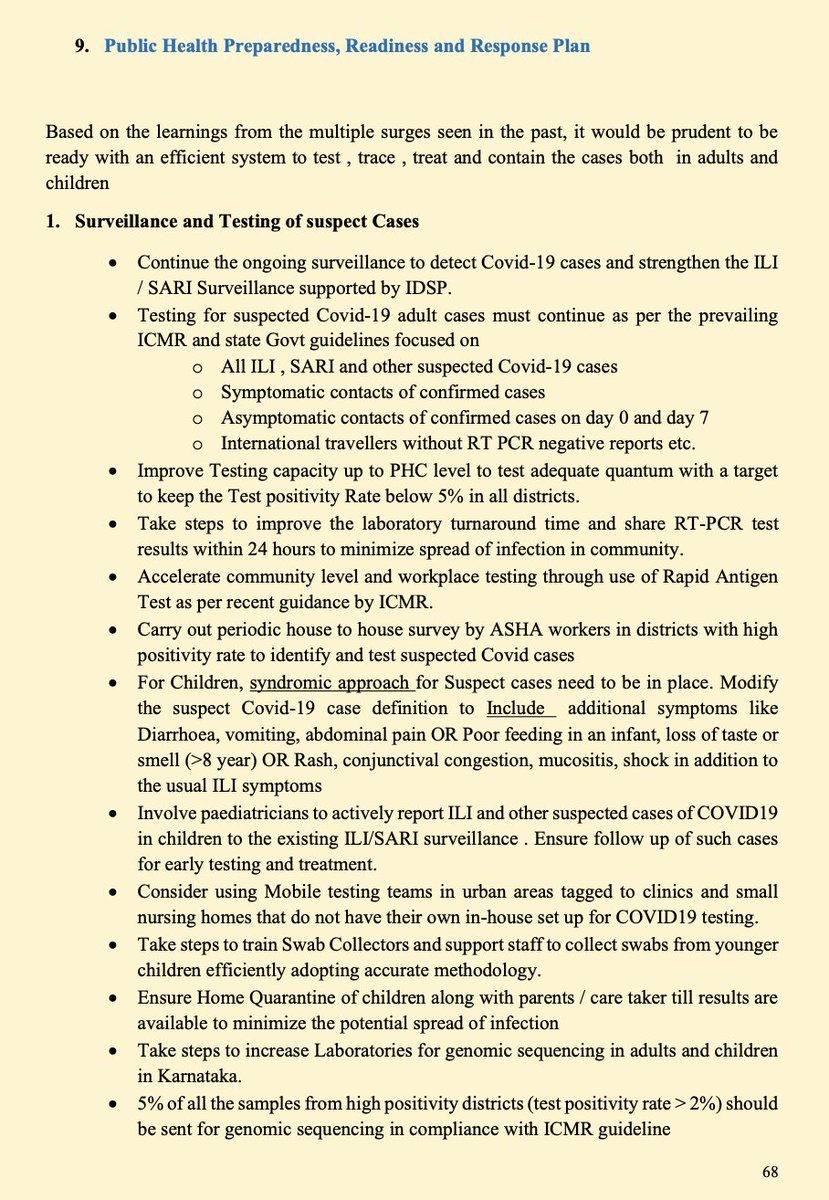
section on sentinel surveillance is particularly useful; willing districts struggling to set up & looking for models; in this section there is some attempt at a template of surveillance that could be established at district levels & could be an early-warning system
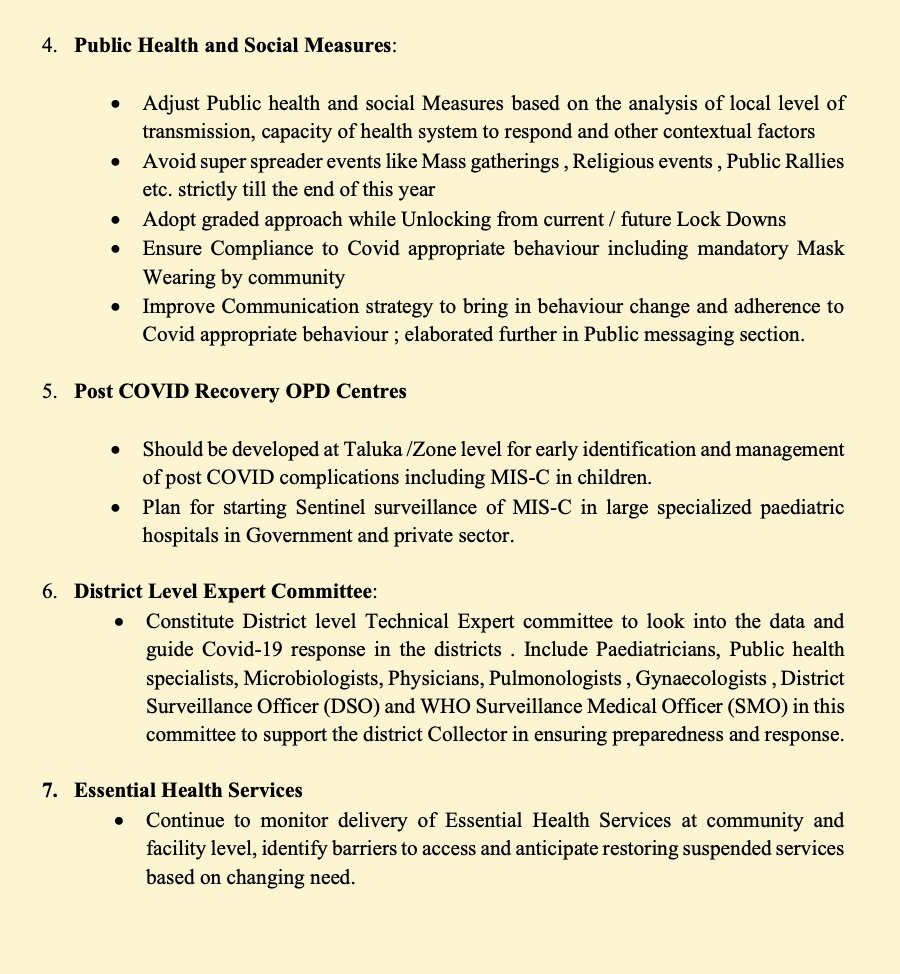
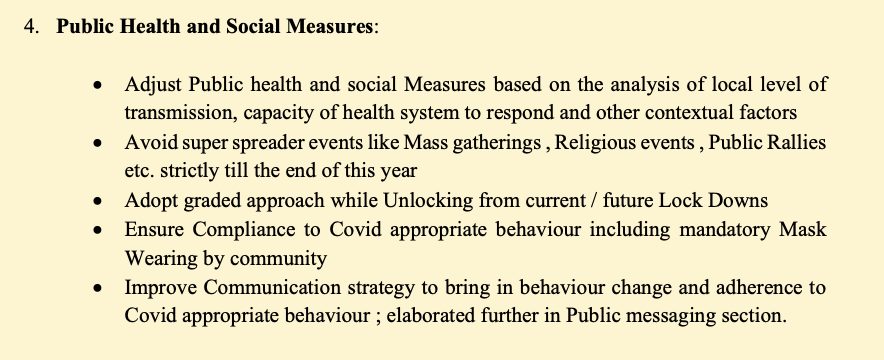
As someone who’s at a village/district level, the 5 bullets under Public health and social measures are quite entertaining; again, did we need an expert committee to put together these brilliant “social measures”?
“Additional Preparedness for COVID 3rd Wave (Pediatric)”, extensive calculations projecting population beds, HR & pediatric patient load; careful calculations done in tables have not been synthesised into district-wise actions which could be sent to DCs, Deans DHOs;
On the nutrition recommendations, focus on milk; but NOT one mention of egg/meat; given huge protein-energy malnutrition, AT LEAST eggs will be vital to overcome the limited protein quality in staple cereals; also bizarre to list cherry-picked NGOs (unclear why these)
Yay for COVID registry; hope this comes through and with good ownership by the participating medical colleges this will yield important insights if well done;
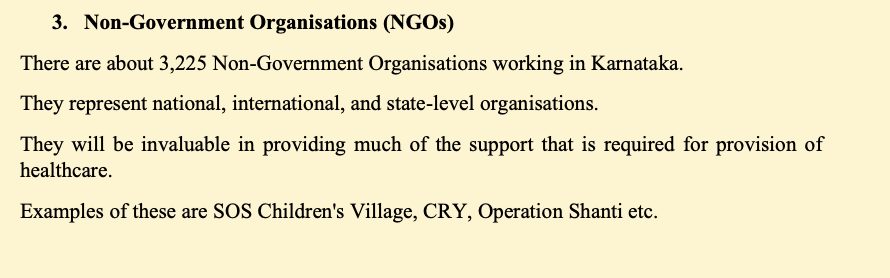
section on PPP shows lack of Public policy expertise; so many PPPs either have limited effectiveness evidence or even plain negative evidence against their use esp for contracting out services; one of the PPP modality is to partner with “public at large” (sic!)
See for eg.
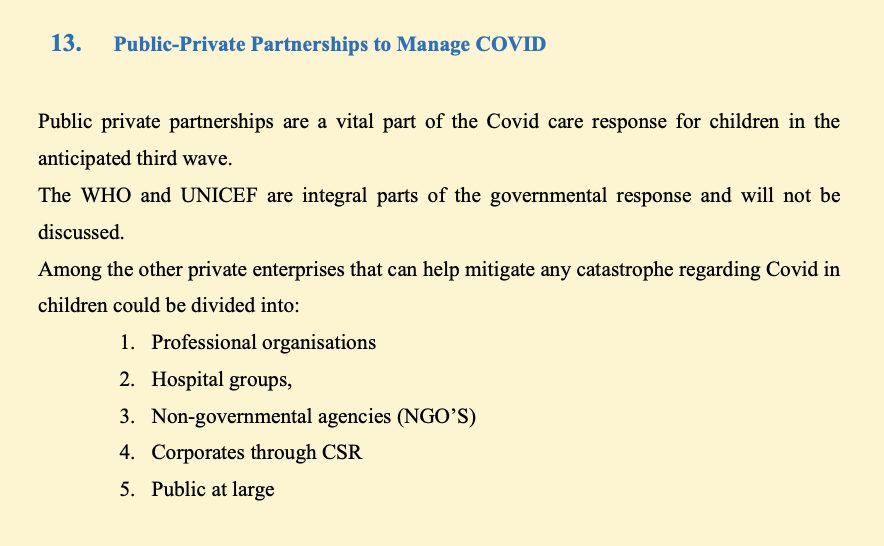
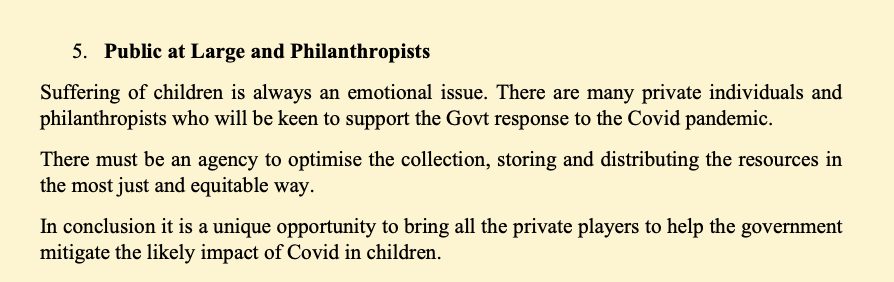
the limited understanding of typology and diversity within “NGO” which are all bunched together thus and arbitrarily 3 out of 3225 have been named specifically to give the reader an “example” (as if readers may not understand what is an NGO)
Partnership with IAP receives extensive mention; where they are working, probably useful & must be better documented; indeed allowing for better engagement of doctor, nurse & other professional bodies in public engagement on key topics is important and lacking till date;
section on re-opening of schools leans on IAP guidance but paradoxically, DS had made non-evidence based assertions in media about huger wave in children; current preparedness for measures in govt schools still lacking & needs decentralised attention at district level;’
Yes, I know it’s easy to critique from “outside”, & perhaps there are several individual members who worked hard on this; but for public health trained people to NOT engage critically with this would be a pity; also those of us involved at GP & taluka/district level have…
…seen that listening & praxis are vital in co-creating a response; with limited consultation & participation, the report & recommendations are only as good as what went (& what did not) go into them
Ultimately, a more participatory & decentralised consultative approach that privileges equity, empathy and caring will be most vital; and that can only happen through broadbased alliances, coalitions and committees at the lower levels
the DS led committee does mention (in passing) district level committees; this is welcome and hopefully will be more broad-based; perhaps just strengthening & empowering GPTFs too needed
Archival of original post on 27 June 2021 at https://x.com/prashanthns/status/1409115020710100992 *Part of COVID-19 response in Chamarajanagar.
Last updated: 2026-10-04 04:20